

A Journey of Cultural,Linguistic and Business Fusion 文化、语言与商业融合之旅
2026-07-13
点击量: 次浏览
Introduction开场介绍
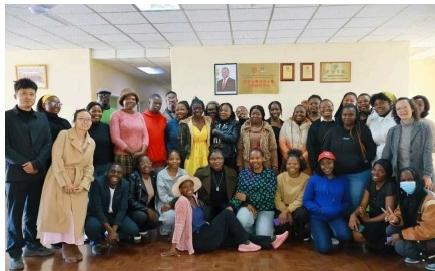
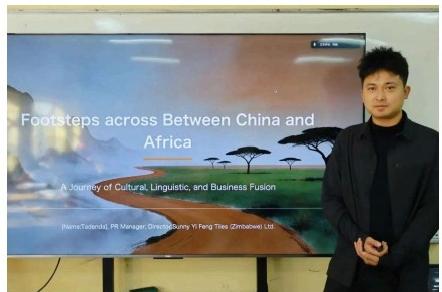
Good morning,everyone.Welcome you all to our third "Footsteps Across China and Africa"lecture series.Today's lecture is entitled"A Journey of Cultural,Linguistic and Business Fusion."I think we all agree that in a period of deepening globalization,the China-Africa relationship has long transcended purely economic cooperation.So cultural understanding and linguistic communication become the right forum connecting our two countries.But,how can we perceive cultural traits through differences in linguistic thinking patterns?And how can Chinese brands,for example,the Sunny people,right?Chinese brands achieve successful localization in the African market?These kinds of questions, among others,will be explored during today's lecture.
大家早上好!欢迎各位来到我们的第三期“行走于中非之间”系列讲座。今天的讲座题目是“文化、语言与商 业融合之旅”。我想我们都认同,在全球化不断深化的今天,中非关系早已超越了单纯的经济合作,文化理解 和语言交流成为了连接我们两国的重要纽带。可是,我们如何通过语言思维模式的差异来感知文化特征?中国 品牌(比如“阳光易峰”陶瓷)又是如何在非洲市场实现成功本地化的?这类问题以及其他相关问题,将在今 天的讲座中探讨。
Let me introduce our distinguished speaker,Mr.Xiao Youliang.Mr.Xiao has a Master of Arts in English Language and Literature from Changsha University of Science and Technology.He currently serves as the PR Manager,Director,and Head of the External Agent Department at Sunny for the Ceramics.With years of dedicated engagement in China-Africa cross-cultural exchange and brand communication,Mr.Xiao brings a rare combination of solid academic grounding and rich first-line practical business experience.So he's truly a practitioner across China and Africa,right?So in today's lecture,Mr.Xiao will explore cross-cultural communication between China and Africa from three dimensions:language, culture,and business.Drawing on various case studies,he willcompare differences in Chinese and English thinking patterns,share unique insights into the customs and practices of southern Africa,and analyze the localization strategies of Chinese brands on the continent,presenting us with a multi-dimensional picture of cultural interaction.Now let's welcome Mr.Xiao Youliang.
请允许我介绍我们的特邀嘉宾——肖有亮先生。肖先生拥有长沙理工大学英语语言文学硕士学位。他目前担任 阳光易峰陶瓷的公关经理、总监兼外联部负责人。凭借多年致力于中非跨文化交流和品牌传播的经验,肖先生 将扎实的学术功底与丰富的一线商业实践经验独特地结合在一起。因此,他真正是一位跨越中非的实践者。在 今天的讲座中,肖先生将从语言、文化和商业三个维度探讨中非跨文化交际。他将结合具体案例,比较中英思 维模式的差异,分享对南部非洲风俗习惯的独到见解,并分析中国品牌在非洲大陆的本地化策略,为我们呈现 一幅多维度的文化互动图景。现在,让我们欢迎肖有亮先生。
Differences in language and thinking patterns 语言与思维模式差异
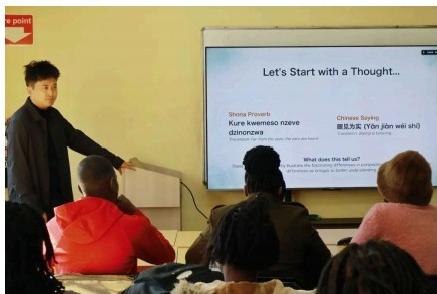
Thank you very much.My Chinese name is Xiao Youliang.I'′m the PR manager,maybe a manager in the same company.So before this lecture,I want to quote a Chinese saying. I don't know if you have learned this phrase "眼见为 实”(Seeing is believing)before.They are totally different in English.In English,we tend to trust our ears,but in China, we trust what we see.So you can see the difference from our language.This perfectly illustrates the fascinating depth in perspective.Today we explore these differences for better understanding.So this is how we read between the lines.
非常感谢。我的中文名字叫肖有亮。我是“阳 光 易 峰 ”陶瓷公司的公关经理,也在该公司担任管理工作。在 开始讲座之前,我想引用一句中国俗语。不知道大家以前有没有学过“眼见为实”这个成语。它在英文中的表 达完全不同。在英语中,我们更倾向于相信耳朵听到的,但在中国,我们相信眼睛看到的。所以,从语言中就 能看出差异。这句俗语很好地体现了视角中那种迷人的深度。今天我们就来探讨这些差异,以求更好地理解彼 此。这就是我们如何“读懂字里行间”的方式。
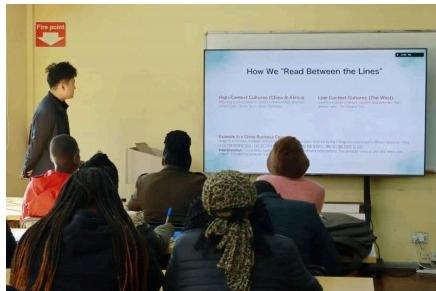
High-context cultures like,for example,China and Africa,and low-context cultures,I think,are the West,like the UK and Europe.China and Africa share some similarities in terms of language.So what is high-context culture?Those are linguistic terms,meaning that meaning is embedded in context,relationships,verbal cues,and safe space.Values emphasize harmony. You always say "face"in Chinese "面子".So in low context cultures,communication is direct, explicit,and precise.Yes means yes,and no means no.
高语境文化9,比如中国和非洲,与低语境文化(我认为是西方,比如英国和欧洲)是不同的。中国和非洲在 语言方面也有一些相似之处。那么,什么是高语境文化呢?这是一个语言学术语,意思是意义蕴含在语境、关 系、言语暗示和安全空间中。价值观强调和谐,就像中国人常说的“面子”。而在低语境文化中,交流是直 接、明确、精确的。“是”就是“是”,“不”就是“不”。
So I have a smallexample.I think that the Chinese always stay polite.If you want to invite a lady or a man for dating, and then he or she will say "next time"that means you don't have a chance,but they wouldn't say no directly.
我举个小例子。我觉得中国人总是很客气。如果你想约一位女士或男士去约会,对方会说“下次吧”,那意味 着你没机会了,但他们不会直接说“不”。
I also have an example in the Chinese business context.Imagine a Chinese manager proposing a fast-paced project financed by their counterpart.Others respond,"This is an interesting idea.Let's consult with the team,we will get back to you."We also always say,"Let me ask my boss,""Let's see what my boss says."But sometimes it's just an excuse, and sometimes it's a reality,I have to get my boss's approval.So this is likely a polite way to express significant reservations.The phrase "consult with the team"and "the elders"indicates that the time is probably too rushed.
我再举一个中国商业语境中的例子。假设一位中国经理提出一个快节奏的项目,由对方出资。另一方回应说: “这个想法很有意思,我们先跟团队商量一下,再给你答复。”我们也常说:“我问一下我老板”,“看看我 老板怎么说”。但有时候这只是推脱,有时候也确实需要老板批准。所以,这很可能是表达重大保留意见的一 种客气方式。“跟团队商量”和“跟长辈汇报”这类说法,暗示着时间可能太仓促了。
I want to introduce two linguistic terms:one is parataxis,and the other is hypotaxis.For example,"看见朋友我很高兴"-see friends,I'm very happy-but in English,we say "I felt very happy."You can see the difference.I don't know if you've studied Chinese for a long time,but you may find that in Chinese we seldom use conjunction words.We don't use constructions like "because,""when,""therefore,""so,"or "however."We don't use them much.So the meaning of parataxis is that the cause-and-effect relationship is in the content,not explicitly stated by conjunctions.Chinese relies on parataxis to connect ideas,inhering semantics in better logical implicature of its context,and emphasizes consciousness and intuitive compression.So we don't use conjunctions;you have to understand the meaning through the words and semantics,not by conjunctions. For example,"努力就会成功"-working hard,you will succeed.But in English we would say,"Because you are working hard, then you can succeed." In China we say"努力就会成功" without using conjunction words, that's also a big difference.So we hope you can understand the logic between the words without using conjunctions.
我想介绍两个语言学概念: 一个是意合, 一个是形合。比如,“看见朋友我很高兴”,英文会说“ I felt very happy”。大家可以看出不同。我不知道大家学中文学了多久,但你们可能会发现,中文里我们很少用连 接词。我们不太用“因为”、“当”、“因此”、“所以”、“然而”这类词。所以,“意合”的意思就是因 果关系隐含在内容里,而不是通过连接词明确表达出来。中文依靠意合来连接思想,通过语义和语境的内在逻 辑来传达含义,强调意识和直观理解。所以我们不用连接词,你需要通过词语本身和语义来理解,而不是靠连 接词。例如,“努力就会成功”,英文我们会说“ Because you work hard, then you can succeed”。中 文 只说“努力就会成功”,不用连接词,这也是一个很大的区别。所以我们希望大家能理解词语之间的逻辑,而 不依赖连接词。
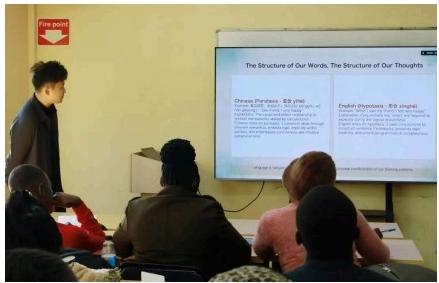
There is also a big difference in terms of subjective tendency vs.objective tendency.In China,we always want to use people as the subject.We don't like to use the passive.For example,"很热",I feel very hot,but in English we always say "It's very hot today" In Chinese we say"我感到很热." So Chinese emphasizes the speaker's personal perception and subjective feelings,taking the speaker as the center.In English,we describe the objective state of the external world, taking the factual situation as the center rather than the speaker.Chinese tends to use human subjects and active voice, introducing the doer first.English favors object-centered constructions,frequently using passive and impersonal constructions to emphasize the object.Another example:in English we say "A new bridge will be built by the government next year,"but in China we never say that;we say "The government will build the bridge next year."We always use people as the subject.We seldom use passive voice.
还有一个很大的差异,就是主观倾向与客观倾向。在中文里,我们总是喜欢用人作主语,不太喜欢用被动语 态。比如,“很热”,英文我们会说“It's very hot today”, 但中文我们会说“我感到很热”。所以中文 强调说话者个人的感知和主观感受,以说话者为中心。而英文描述外部世界的客观状态,以事实情况为中心, 而不是以说话者为中心。中文倾向于使用人作主语和主动语态,先引入动作的执行者。英文则偏好以事物为中 心的结构,经常使用被动语态和非人称结构来强调客体。再举个例子:英文说“A new bridge will be built by the government next year”, 但中文不会那样说,我们会说“政府明年要建一座新桥”。我们总是用人 作主语,很少用被动语态。
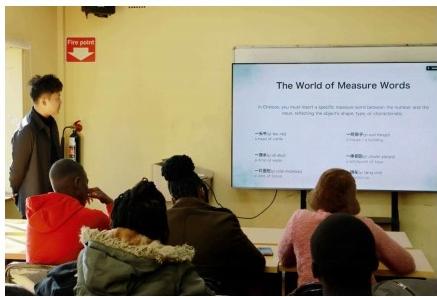
So Chinese sentences are centered on the speaker's subjective experience.Also,in Chinese we must use measure words, like "book"in English we may say "one book,""two books," but in Chinese you must use measure words:"一本书," "一张纸." So in Chinese you must insert a specific measure word between the number and the noun,reflecting the object's shape,type,characteristics- for example,"一所房子,""一座房子,""一滴水,""一串钥匙,""一片面包,""一辆 车." In English we also use measure words sometimes,like "one bottle of beer,"but in Chinese you must use them always.
所以,中文句子是以说话者的主观体验为中心的。另外,中文里必须使用量词,比如“书”,英文可以说 “one book,two books”, 但中文必须说“一本书”、“一张纸”。中文必须在数词和名词之间插入特定的 量词,以反映物体的形状、类型、特征,比如“一所房子”、“一座房子”、“一滴水”、“一串钥匙”、 “一片面包”、“一辆车”。英文中有时也用量词,比如“one bottle of beer”,但中文是必须用的。
Now I want to introduce a famous story in Chinese.It also teaches us about our way of thinking.The story is about an old man living near the border who lost his horse,which was seen as a misfortune.Unexpectedly,the horse later returned with a herd of wild horses,turning the loss into a gain.Then his son broke his leg while riding a wild horse, which was again a misfortune in most people's opinions.But this injury saved the son from being conscripted to fight in a war,where many young men died,thus turning misfortune into a blessing once more.
现在我想介绍一个著名的中国故事。它也教给我们一种思维方式。故事说,有个住在边境附近的老人丢了一匹 马,大家都觉得是祸事。没想到,那匹马后来带回了一群野马,于是坏事变成了好事。后来,他的儿子骑野马 时摔断了腿,这又是大家眼中的坏事。但这次受伤却让儿子免于被征去打仗,而那场战争中有很多年轻人战死 了,于是坏事又一次变成了好事。
I think every Chinese knows this story;they study it since they are young.This idea reflects the dialectical thinking in China,that events are not isolated but part of a larger interconnected whole.It teaches us that misfortune can lead to fortune,urging us to look beyond immediate gains and losses and view things in a dynamic and long-term perspective. That's why this story is very well-known and fundamental.If we don't want to do something,we don't feel disappointed because we think that this misfortune might become fortune in the future.
我想每个中国人都知道这个故事。这种思想反映了中国的辩证思维:事件不是孤立的,而是更大整体的一部 分。它告诉我们,祸可以转为福,劝我们要超越眼前的得失,用动态的、长远的眼光看问题。这就是为什么这 个故事非常有名的原因。如果我们不想做什么事,也不会感到失望,因为我们会想,也许眼前的坏事将来会变 成好事。
Another example,I want to make a comparison about "I am because we are",in Western countries,they have a famous saying:"I think,therefore I am."But in China,we are different.I think we are in the middle,a person is a person who shows others,so we emphasize the importance of the community. Right.In the West,they focus on individualism, emphasizing self-reliance and personal achievement.They romanticize individual autonomy and self-determination in life choices and goals.But here I want to introduce Chinese ideologies:we also emphasize the community and society, but we also emphasize the importance of self-reliance.So we call it a strong collective that coexists with modern individual ambitions,balancing communal responsibility and personal development.
再举一个例子,我想比较一下“我因我们而在”,在西方,有句名言叫“我思故我在”。但在中国,我们不 同。我觉得我们处于中间, 一个人是因为他人而成为人,所以我们强调集体的重要性。在西方,他们注重个人 主义,强调自立和个人成就,推崇个人在生活选择和目标上的自主性和自我决定。但这里我想介绍一下中国的 思想:我们也强调集体和社会,但也强调自立的重要性。所以我们称之为“强集体”与“现代个人志向”共 存,在集体责任与个人发展之间取得平衡。
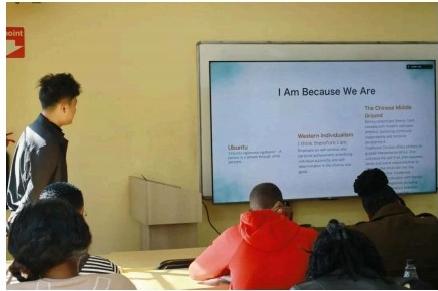
Traditional Chinese ethics centers on interpersonal ethics.One cultivates the self first,then assumes family and social responsibility,integrating the small self into the greater collective.This balances individual self-cultivation with family and national obligations,pursuing harmonious coexistence between individuals and communities.So we emphasize self- cultivation,if everyone cultivates themselves,the community becomes strong.Everyone contributes to themselves.Not only do we rely on society,but we also emphasize society and the environment's influence on us.
中国传统伦理以人际伦理为核心。先修身,再齐家、治国,将小我融入大我。这样就平衡了个人修养与家庭、 国家责任,追求个人与集体的和谐共处。所以我们强调自我修养,如果每个人都能修养自身,集体就会强大。 每个人都要完善自己。我们不仅要依靠社会,也强调社会和环境对我们的影响。
Yes,that's the question I mentioned before.I think they always say "yes"and "no"is "no."But in China,or maybe some other countries,"yes"can mean "I hear you,""I understand,"or polite refusal.In my company,many local employees sometimes say"yes,"but that's not areal "yes."When you ask,"Let's meet tomorrow at 9 a.m.,"they will say "yes,"but maybe they show up at 9:30.Nowadays,I think in China we also say "yes"for time commitments,but for other issues, the situation might be different.
这就是我之前提到的问题。我觉得西方人说“是”就是“是”,“不”就是“不”。但在中国,或者某些国 家,“是”可能表示“我听到了”、“我明白了”,或者是一种客气的拒绝。在我公司里,很多当地员工有时 会说“是”,但并不是真的答应。当你问“我们明天上午九点见吧”,他们会说“是”,但可能九点半才到。 现在我觉得在中国,对于时间承诺我们也会说“是”,但其他问题、其他场合可能就不一样了。
Cultural customs and social etiquette 文化习俗与社交礼仪
Now let's talk about customs.In southern Africa,people who live there,regarding art,we see the marbles.They also like bright colors and geometric patterns as visual storytelling.But actually,in traditional Chinese culture,we focus on nature,and symbolism.Chinese people don't like very colorful clothes;we always wear black,grey,or white.We don't like bright colored clothes.So someday when you go to China,don't dress in those colorful clothes with many patterns,you might look strange in the street.
现在谈谈风俗习惯。在南部非洲,人们在艺术方面,我们看到那种大理石纹样,他们也喜欢用鲜艳的色彩和几 何图案来进行视觉叙事。但中国传统上比较内敛,注重自然和象征。中国人不喜欢穿太花哨的衣服,我们通常 穿黑、灰、白。所以将来你去中国,不要穿那种颜色特别多、图案特别花的衣服,否则走在街上会显得很怪。
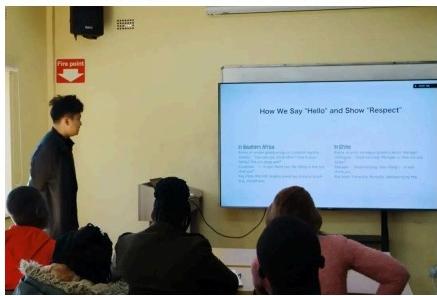
How do we say hello and show respect?This is also important.In southern Africa,for example,people greet regular customers warmly,even saying "my brother,how is your family?Did you sleep well?"and we reply "I'm well,thank you.My brother is very fine too,and you?"The key trait is one's language and physical touch.But in China,let's say a junior colleague greets a senior manager:"Good morning,Manager Li,how are you today?"The manager says,"Good morning,Xiao Wang,fine,thank you."The picture is different,formality and dressing.
我们如何打招呼和表达尊重呢?这也很重要。在南部非洲,人们热情地问候熟人,甚至会说“兄弟,你家人好 吗?你睡得好吗?”我们回答“我很好,谢谢。我兄弟也很好,你呢?”关键是语言和身体接触。但在中国, 比如一个晚辈问候一位高级经理:“李经理,早上好,您今天怎么样?”经理回答:“早上好,小王,挺好 的,谢谢。”这就显得比较正式,有层级感。
I don't know if this example is really understood,but actually in China we don't say "how are you"often.When you say "你好"(hello),it's fine,but we also make you feel embarrassed.We say "good morning,""good afternoon,"etc.But if you are familiar with each other,you might also say "Morning,how are you doing?"But if we get familiar,we don't say"你身体怎么样?"(How is your health?),we just go directly to the topic.We say"你好"and then state your purpose or topic.
我不知道这个例子大家是不是真的理解,但实际上,在中国我们不太常说“how are you”。说“你好”是可 以的,但有时也会让你觉得尴尬。我们说“早上好”、“下午好”等等。如果彼此熟悉,也可能说“早,怎么 样?”。但如果很熟了,我们不会说“你身体怎么样?”而是直接进入正题,说“你好”,然后说明来意或话 题。
When you study Chinese,you must also understand"面子"(face),why is it so important?It is a core social concept in Chinese culture,referring to one's social prestige,dignity,public reputation,and the respect received from others.It is about winning others'admiration and social recognition in public;to lose face is to suffer embarrassment,humiliation, or public disapproval.To give someone face means to show deference,approval,or support,and to protect another person's dignity.So keeping face is very important in all dialogues between Chinese people.When you talk to others, you must always think about giving others space,showing respect,and protecting their dignity.Out of consideration for face,we often soften criticisms or refusals to avoid embarrassing others.
在学习中文时,你们也要理解“面子”,为什么它这么重要?“面子”是中国文化中一个核心的社会概念,指 的是一个人的社会声望、尊严、公众名誉以及他人给予的尊重。它关乎在公众面前赢得他人的钦佩和社会认 可;丢面子就是遭受尴尬、羞辱或公众非议。给面子就是表示尊重、认可或支持,保护他人的尊严。所以在中 国人之间的所有对话中,维护面子都非常重要。当你与人交谈时,必须想着给对方留空间,表示尊重,保护对 方的面子。出于“面子”的考虑,我们往往会委婉地表达批评或拒绝,以免让对方难堪。
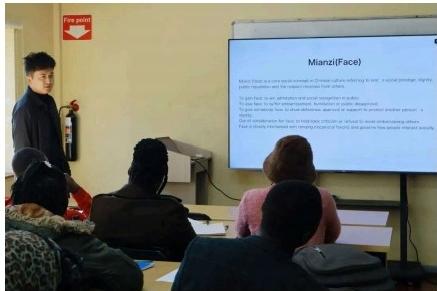
"面子"(Face)is closely integrated with "人情"(renqing)-social protocol-and governs how people interact socially. Have you heard of"人情" or studied it?It means protocol favors.In Chinese society,if someone does you a favor,then you are indebted to them,and you must return a favor in the future.It's very serious.When you do others a favor,they also keep it in mind and think that they owe you.It's like money or credit.
“面子”与“人情”紧密相连,影响着人们的社交互动。大家听说过“人情”或学过“人情”吗?它指的是人 情往来。在中国社会,如果有人帮了你一个忙,那你就欠了人情,将来必须回报。这是很严肃的事情。你帮了 别人,别人也会记在心里,觉得欠你人情。这就像金钱或信用一样。
Family values and workplace management 家庭观念与职场管理
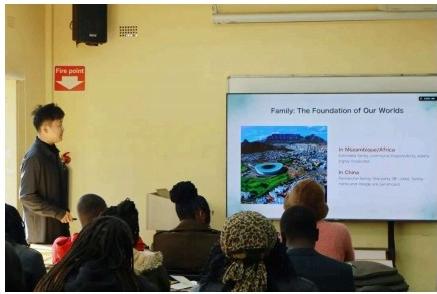
I also want to mention the foundation of our work,I think it is the family.In Africa and China,we both value families. But in China,we focus on the criteria after family failure?Actually,that's serious.Even nowadays,the situation is different.We respect traditional Chinese culture,and we respect our parents and grandparents very much.But I think there is a big difference.
我还想提到我们工作的基础,我认为是家庭。在非洲和中国,我们都重视家庭。但在中国,我们更注重家庭责 任。实际上现在情况也有所不同。我们尊重传统文化,非常尊敬父母和祖父母。但我觉得有一个很大的差异。
In some cultures,parents do not provide their children with pocket money or financial support after they become adults; young people are expected to earn income independently from an early age and become financially self-reliant.But in China now,it's different.Financial support from Chinese parents to their children continues through most stages of life, covering education,marriage,and even housing for multiple generations.This assistance comes from traditional family ethics and social pressures.So even when teenagers grow up,their parents keep supporting them financially.Even after graduation and work,if your salary is not enough for living,parents will still support you.Why?Because social pressure is immense.For example,the housing prices in China are crazy.
在有些文化中,父母在孩子成年后就不再提供经济支持了;年轻人从小就要自己赚钱,成年后就要经济独立。 但在中国现在不同了。中国父母对孩子的经济支持会贯穿人生的多个阶段,包括教育、婚姻甚至买房,这种支 持源于传统家庭伦理和社会压力。所以即使孩子长大了,父母也会继续支持。哪怕大学毕业工作了,如果工资 不够生活,父母还会补贴。为什么?因为社会压力太大了。比如中国的房价高得离谱。
Here in Zimbabwe,maybe housing is 3000,5000,or maybe less or more.But in China,if you are a man and want to get married,you have to have a house first.It's not just money,you need to buy a house.So that's why Chinese parents need to support their children even when they are 25 or 30 years old.If my son is 25 or 30 but not married,I need to give him money,I need to save money for him.Now it's quite different because the cost of living is high but salaries are still low.
I think it'sjust like here,salary is low but cost of living is high.
在津巴布韦,房价可能是3000、5000,也许更少或更多。但在中国,如果你是男人,想结婚,首先得有房子。 那不仅仅是钱的问题,你得买房。所以中国父母即使孩子25岁、30岁也要继续支持。如果我儿子25或30岁还没 结婚,我得给他钱,我得为他攒钱。现在情况很不一样,因为生活成本高,但工资低。我觉得跟这里一样,工 资低但物价高。
But here,parents may not support you after you become an adult.In China,parents will still support you even after you get married and have children,they give money to help raise grandchildren.I think it's because at least you have one or two children.But here in Zimbabwe,it would be hard for parents to take care of many kids.That may be a reason. Maybe just 15 years ago,China was like here,parents normally had more than three kids.But nowadays,because of the one-child policy (though abandoned more than ten years ago),people are still not ready to have babies because the cost of living is too high.So when parents have only one or two kids,they tend to spoil them,that makes sense.So I think that's the difference.
但在津巴布韦,成年后父母可能就不管了。在中国,父母即使你结婚生子了也会继续给钱,帮忙养孙子。我觉 得是因为至少他们只有一两个孩子。但在津巴布韦,父母要照顾多个孩子是很难的。这也许是一个原因。大概 15年前,中国也跟这里差不多,父母通常有三个以上的孩子。但现在,虽然独生子女政策已经取消十多年了, 但人们还是不太愿意生孩子,因为生活成本太高。所以当父母只有一两个孩子时,就容易宠孩子,这也合理。 所以我觉得这就是区别。
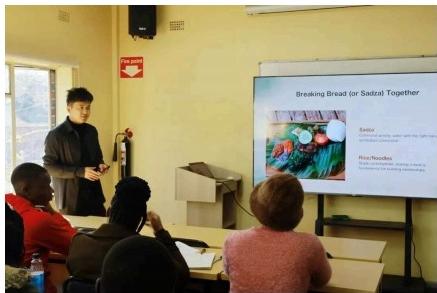
Here in Zimbabwe,the staple food is sadza,but in China it's rice and noodles.Even in northern China,they eat noodles that's the staple,while in southern China we eat rice,that's also a big difference.Even within China,people in the north eat noodles,and people in the south eat rice.They have cultural differences.For example,I'm from the southern part ofChina,but ifI go to the north,I can't get used to it because every day is noodles and pancakes,I always eat rice and dishes,and I like spicy food.Many people like spicy food.Sometimes even your main food influences you.
在这里,津巴布韦的主食是“sadza”, 但在中国是米饭和面条。即使在北方,他们吃面条,那是主食;南方吃 米饭,这也是一个很大的差异。甚至在中国内部,北方人吃面,南方人吃米,文化也有不同。比如我来自南 方,但如果去北方,我会不习惯,因为天天是面条和煎饼,我习惯吃米饭和炒菜,而且我喜欢辣的。很多人都 喜欢辣。有时候主食也会影响你的性格。
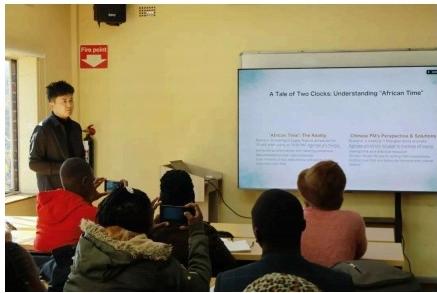
There is an old story about "African time."But time and punctuality are serious in China because nowadays,for example,in the company or in the school,if you are late,you willface punishment.In a Chinese company in China,if you are late two or three times,you get fired,and the law also protects the company.So you must be punctual when you work in a Chinese company.If you are not punctual,you will lose face.So if you want to work in a Chinese company,I think the first thing is to go to the company on time.
有个关于“非洲时间”的老说法。但在中国,时间和守时是非常严肃的,因为在公司或学校,如果迟到就会受 到惩罚。在中国的中国公司里,如果迟到两三次就会被解雇,而且法律也保护公司。所以在中国公司工作必须 守时。如果你不守时,就会丢面子。所以如果你想在中国公司工作,我觉得第一件事就是准时上班。
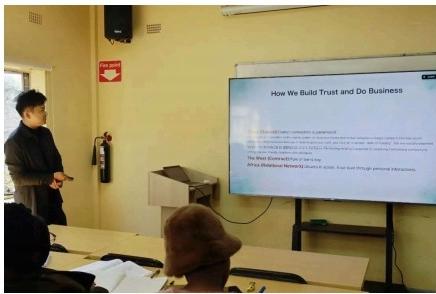
How do we build trust and do business? In China, we call it"关系"(guanxi).For instance,human connections are a social framework referring to the implicit system of reciprocal favors and mutual obligations deeply rooted in Chinese social interaction.When someone does you a favor,you incur a debt of gratitude.You are socially expected to repay this kindness at an appropriate time in the future.
我们如何建立信任和做生意呢?在中国,我们称之为“关系”。举个例子,人际关系是一种社会框架,指的是 根植于中国社会交往中的互惠回报和相互义务体系。当有人帮了你,你就欠了一份人情。你被社会期望在将来 适当的时候回报这份善意。
Maintaining the"人情"social framework is essential to sustain harmonious connections among relatives,friends, neighbors,and colleagues.It's very important.So in China,sometimes we invite you to have a meal together.In the future,you are supposed to invite the one who invited you.We need to pay back,that's how the relationship betweenboth of you grows.So this is very important when dealing with Chinese people.When someone invites you for food, keep it in mind,and in the future you will pay back.By reciprocating,your relationship will increase.
维护“人情”社会框架对于维持亲戚、朋友、邻居和同事之间的和谐关系至关重要。这很重要。所以在中国, 有时我们会请客吃饭。将来,你也应该回请对方。我们需要回报,这样双方的关系才会增进。所以跟中国人打 交道,这一点很重要。当有人请你吃东西,你要记在心里,将来要回请。通过这样的互动,你们的关系会加 深。
Shared Past,Similarities &Differences 共性与差异
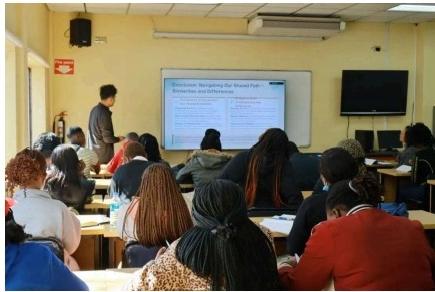
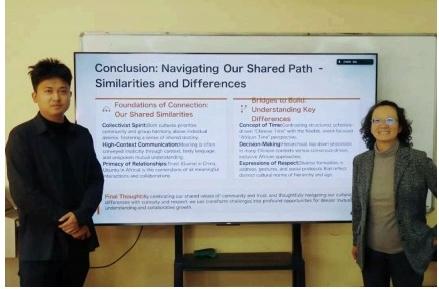
Navigating our shared past,similarities and differences.We do have many similarities in our language and culture, though there are also differences because China and Africa are more than 13,000 kilometers apart.The foundation of our connection lies in shared similarities.First,collective spirit,both cultures prioritize community and group harmony above individual desires,fostering a sense of shared destiny.Second,high-context communication,meanings are often conveyed implicitly through context,language,and unspoken mutual understanding.Trust,"guanxi"in China,"Ubuntu" in Africa,is the cornerstone of all meaningful interaction and collaboration.So we need to build a bridge,a bridge to understanding key differences.
回顾我们共有的过去,相似之处与不同之处。我们在语言和文化上确实有很多相似之处,但也有差异,毕竟中 国和非洲相隔一万三千多公里。我们连接的基础在于共有的相似性。第一,集体精神,两种文化都将集体和群 体和谐置于个人欲望之上,培养了一种共同命运感。第二,高语境沟通,意义往往通过语境、语言和默契隐含 地传达。信任,中国的“关系”,非洲的“乌班图”是所有有意义互动和合作的基石。所以我们需要搭建一座 桥梁, 一座理解关键差异的桥梁。
The concept of time:China has a structured,schedule-driven time,while Africa has a more flexible,event-focused time perspective.In China,time is very serious,we must be punctual,we must be on time.
时间观念:中国是结构化的、按计划驱动的时间,非洲则更具灵活性、以事件为中心的时间观。在中国,时间 非常严肃,必须守时,必须准时。
Decision-making:a top-down process in many Chinese contexts,versus a consensus-driven and inclusive approach in Africa.So when you work in a Chinese company,please do not always put forward your suggestions or ideas.In a Chinese company,if the boss says something,just follow it.Otherwise,you may have trouble.This is a big culture shock.People who work in a Chinese company should not always doubt their boss.In Chinese culture,someone in a higher position is assumed to have better abilities and capabilities,so just follow your boss,follow your supervisor. That's what we do in Chinese companies.So do not openly oppose your supervisor's decisions.Sometimes you can quietly put forward your suggestions,but don't always say "No,no,no,Iknow better than you",that will make you not a good employee in a Chinese company.
决策方式:中国很多情境中是自上而下的,而非洲更倾向于共识驱动和包容性方法。所以在中国公司工作时, 不要总是提出你的建议或想法。在中国公司,老板说了,你就照做。否则,你会有麻烦。这是一个很大的文化冲击。在中国公司工作的人,不要总是质疑老板。在中国文化中,职位高的人被认为能力更强,所以跟着老 板、跟着主管走就行了。这就是我们在中国公司的做法。所以不要公开反对主管的决定。有时你可以私下提建 议,但不要总是说“不不不,我比你知道得多”,那会让你在中国公司里变成不受欢迎的员工。
Reflections on respect:diverse formalities in address,gestures,and social protocols reflect distinct cultural norms.Here in Zimbabwe and in China,we must respect our supervisors,bosses,and elders,that's very important.That's how you can be successful in a Chinese company or community.So finally,by celebrating our shared values of community and trust,and by navigating our cultural differences with curiosity and respect,we can transform challenges into opportunities for deeper understanding and collaborative growth.Thank you.
关于尊重:在称呼、手势和社交礼仪上的多样形式反映了不同的文化规范。在津巴布韦和中国,我们都必须尊 重上级、老板和长辈,这很重要。这就是你在中国公司或社区里成功的秘诀。最后,通过颂扬我们在集体和信 任上的共同价值,并以好奇和尊重的态度来对待我们的文化差异,我们就能把挑战转化为深化理解和合作成长 的机遇。谢谢大家。
Questions and Discussion 答疑与交流
Teacher 1:It's not a question as such,but at least we have learned the differences are very clear.And one thing our African men do,you know what they do?If they want to do something,they'll say "Il go and ask my wife."It simply means no.You want to borrow some money from him and he tells you,"Let me go and ask my wife if we can give you." It means no,it just means no.We also have our wallets controlled by our wives.Yeah,when we say "II each out to my wife,"it doesn't mean that;it simply means refusal.
老师1: 这不算是个问题,但至少我们学到了这些很明显的差异。还有一件事,我们非洲男人,你知道他们怎 么做的吗?如果他们想做某件事,他们会说“我去问问我妻子”。那其实就是“不”的意思。如果你要向他借 钱,他说“我去问问我老婆能不能借给你”,那就是“不”,就是拒绝。我们的钱包也是老婆管的。是的,当 我们说“我去问问我老婆”,并不真的意味着要去问,而就是拒绝。
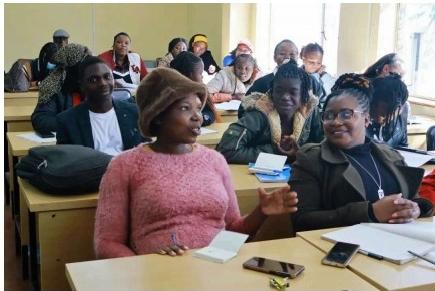
Mr.Xiao:And sometimes it means I really have to ask my wife because the money is in my wife's hands.So in that way,for example,who is in charge of the family's money,wife or husband?Sometimes you work and sometimes you just do something,but you don't put all the money together.It's because the family should have a plan for how we are going to budget.
肖先生:有时候也确实需要问,因为钱在我老婆手里。那么,比如说,家里谁管钱?妻子还是丈夫?有时你工 作,有时你做点事,但不会把所有钱都放一起。因为家庭应该有一个预算计划。
Teacher 2:I wanted to ask:in African culture,when visitors come to our house,we have to cook for them.Is it the same in China?If visitors come to our house,can they eat without you cooking for them?
老师2: 我想问一下:在非洲文化里,有客人来家里,我们一定要做饭招待他们。中国也是这样吗?如果客人 来家里,他们能不吃你做的饭就走吗?

Mr.Xiao:Protocol for the relations between people,especially for some people and some relations,it's the best way to treat our visitors with some food,for example,some tea or anything.So the first thing when anyone visited my family, my parents asked me to cook something for our visitors,regardless of whether they had already eaten.It was actually a big burden for me,but right now it's okay.Among Chinese people,we just ask people directly:"Do you need something to eat?Is it okay to have dinner or lunch at home or shallwe go outside?"Thank you so much.
肖先生:人与人之间的礼仪,尤其是某些人际关系中,最好的方式就是用食物招待客人,比如茶或其他东西。 所以以前只要有人来我家,我父母就让我做点东西给客人吃,不管他们是否已经吃过。那对我来说确实是个大 负担,但现在没事了。现在中国人之间,我们就直接问:“你要不要吃点东西?在家吃午饭/晚饭还是出去 吃?”非常感谢。
Dr.Mukaro: I really like it,I'm ready to make a comment on the issue of families in China.No,there used to be a one-child policy at some point,soit happened that when I was in China one day,I visited one of my teachers.And there were about six -three old ladies and three old gentlemen.Yes,why?Because they were coming from multiple generations,remember,with one child,two parents would follow their daughter or their son.Then the other two also follow their daughter or their son.So it was really a big family of old people.
Mukaro博士:我很喜欢这个话题,我想就中国的家庭问题发表一个评论。中国以前有独生子女政策,所以有 一次我在中国,去拜访一位老师。那里有六位老人——三位老太太和三位老先生。为什么会这样?因为他们是 多代人,你想,一个孩子,父母会跟着女儿或儿子,然后对方的父母也跟着,所以成了一大家子老人。

And going back to the issue of pocket money and so forth,I want to believe this is sort of an intergenerational world,so to speak.So you can see from the example that I have given-all these people bring all their money together,so there is enough.In African communities,of course,if we intended historically,a lot of basic control came later.Some people would really have kids and at the end of the day,like someone already said,there are a lot of siblings.Once you have finished your O-level,in the past,O-level was a lot because if you just go to town and look for a job so that you can support,there is not much support that you can get after basic school,you know,schoolboy,they know the issue of...I think our teachers just need to go and research more or vary it in China.It's quite an interesting world of the story.
回到零花钱的问题,我觉得这有点像一种代际间的共同体。所以从我的例子可以看出,所有这些老人把钱凑在 一起,所以总钱数是够的。在非洲社区里,当然,如果从历史上看,很多基本控制是后来才有的。有些人会生 很多孩子, 最后就像刚才有人说的,兄弟姐妹很多。 过去你考完0- level⁹ 后,如果去城里找工作, 就能养家, 但之后能得到的经济支持并不多。我觉得我们的老师们可以再去研究一下中国的这个现象。中国有很有趣的故 事。
Prof.Li:OK,thank you very much to Mr.Xiao for giving us an insightful and wonderful presentation.We can talk later about all of these kinds of things,for example,marriage,family issues,or protocol.Thank you again.
李老师: 好的,非常感谢肖先生带来这场深刻而精彩的演讲。我们以后可以继续聊这些话题,比如婚姻、家庭 问题或礼仪。再次感谢大家。
图片及录音整理周兴祥 编译李丽琴