
Traditional Religion,Medicine,and Cultural Heritage as Pathways to Socio-Economic Transformation
2026-07-20
点击量: 次浏览
传统宗教、医学与文化遗产作为社会经济转型的路径
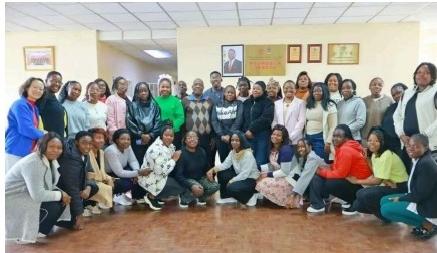
Introduction开场介绍
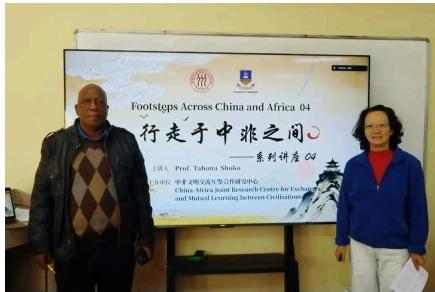
Good morning,everyone.Welcome to the fourth lecture of our "Footsteps Across China and Africa"series.It is my great honor to introduce our distinguished speaker,Professor Tabona Shoko from the University of Zimbabwe.Professor Shoko holds a Doctor of Philosophy from the University of Zimbabwe and is a member of the Faculty of Arts and Humanities,Higher Degrees and Research and Innovation Committee.He is a Fulbright Scholar at Vanderbilt University, Tennessee,USA.He has conducted research across the Netherlands,the United Kingdom, Germany,Italy,Botswana,Sweden,and China.His scholarship focuses on ethics,traditional religions,and the intersection of Indigenous Knowledge Systems with pressing contemporary issues,including climate change,public health,human rights,and peace building.
大家早上好。欢迎来到我们"行走于中非之间"系列讲座的第四讲。我非常荣幸地向大家 介绍我们今天的主讲嘉宾——来自津巴布韦大学的塔博纳 · 肖科教授。肖科教授拥有津 巴布韦大学哲学博士学位,现任该校艺术与人文学院高级学位及科研创新委员会委员。 他曾作为富布特学者在美国田纳西州范德堡大学访学。他的研究足迹遍及荷兰、英国、 德国、意大利、博茨瓦纳、瑞典和中国。其学术专长涵盖伦理学、传统宗教,以及本土 知识体系与当代紧迫议题的交叉研究,包括气候变化、公共卫生、人权与和平建设。
In 2023,Professor Shoko conducted fieldwork in Jinyun County,Zhejiang Province,China, where he undertook a comparative study of Traditional Medicine in Zimbabwe and Traditional Chinese Medicine. He discovered that despite sharing common spiritual foundations in ancestor veneration ritual healing,and herbal wisdom,the two systems have followed strikingly divergent paths.While TCM has achieved global commercialization,institutional protection,and UNESCO recognition,Zimbabwean Traditional Medicine remains largely localized.This observation led him to a compelling argument:tradition is not a marker of backwardness,but a resource for development.The Chinese model,he suggests,offers valuable lessons for Zimbabwe to revitalize its indigenous medicine through educational reform under the Heritage-Based Curriculum,Education 5.0,and Vision 2030.
2023年,肖科教授在中国浙江省缙云县开展田野调查,对津巴布韦传统医学与中医药进 行了比较研究。他发现,尽管两种医学体系在祖先崇拜仪式和草药智慧方面有着共同的 精神根基,却走上了截然不同的发展道路。中医药已实现全球商业化、制度性保护,并 获得联合国教科文组织认可,而津巴布韦传统医学在很大程度上仍局限于本土。这一观 察促使他提出了一个引人深思的论点:传统并非落后的标志,而是发展的资源。他认 为,中国模式为津巴布韦提供了宝贵经验,可通过基于遗产的课程体系、教育5.0°和 2030愿景下的教育改革,重振本国本土医学。
Today,Professor Shoko will share insights from this comparative research and discuss practical approaches for integrating traditional medical knowledge into classroom pedagogy.Please join me in welcoming Professor Shoko,
今天,肖科教授将分享这项比较研究的见解,并探讨将传统医学知识融入课堂教学实践 的方法。让我们以热烈的掌声欢迎肖科教授。

The Current Situation and Challenges of Traditional Medicine in Zimbabwe (TMZ) 津巴布韦传 统医学的现状与挑战
Well,thank you very much,Professor Li,for the colorful introduction.Let me start by greeting you.How are you?Fine?Great!The introduction has already said a little bit.I'm going straight into the topic for the day:"Footsteps Across China and Africa —Traditional Religion, Medicine,and Cultural Heritage as Pathways to Socio-Economic Transformation.”I'll explain the topic.“Footsteps across China and Africa”means I have been to China,I have had my footsteps on Chinese soil,and I am also Zimbabwean.So,let's see how that experience connects with medicine and very important ways we shall be moving with this presentation.
非常感谢李老师的精彩介绍。首先向大家问好。大家还好吗?很好!太好了!介绍中已 经提到了一些内容,我现在直接进入今天的主题:"行走于中非之间——传统宗教、医 学与文化遗产作为社会经济转型的路径"。我来解释一下这个题目。"行走于中非之间"意 味着我曾踏上中国的土地,同时我也是津巴布韦人。让我们看看这段经历如何与医学相 联系,以及我们在本次演讲中将探讨的重要方面。
Traditional religion simply focuses on the religion of the local people,and my focus is on the Shona people. We know there are different ethnic groups in Zimbabwe,but the Shona is the largest and are primarily the focus.Traditional medicine refers to the actual living practices of the people,linked to cultural heritage, cultural practices as a heritage.We want to see how they connect and how they provide pathways for socio- economic transformation in both countries.
传统宗教主要关注当地民众的宗教信仰,我的研究重点是绍纳人 °。我们知道津巴布韦 有不同的族群,但绍纳人是最大的族群,也是主要的研究对象。传统医学指的是与文化 遗产、作为遗产的文化实践相关联的民众实际生活实践。我们希望探讨它们如何相互关 联,以及如何为两国提供社会经济转型的路径。
By way of introduction,my paper examines the spiritual basis of traditional medicine in Zimbabwe,which in some cases can have negative connotations because,when it was used in the colonial era,it portrayed a tradition as backward and primitive.But this lecture is simply saying:no,it is not necessarily backward,but it is a heritage of the past,transmitted through generations.So we also call it "heritage-based medicine." These are the short forms:TMZ(Traditional Medicine in Zimbabwe)and TCM(Traditional Chinese Medicine).All these are serious cultural elements for socio-economic transformation.
作为引言,我的论文探讨了津巴布韦传统医学的精神基础。在某些情况下,这一概念可 能带有负面含义,因为在殖民时代,它被用来将传统描绘成落后和原始的东西。但本次 讲座要表达的是:不,它并非必然是落后的,而是代代相传的过去遗产。因此,我们也 称之为"基于遗产的医学"。这些是简称:TMZ ( 津巴布韦传统医学)和TCM ( 中医 药)。所有这些都是社会经济转型的重要文化要素。
Despite the spiritual and holistic foundations,TCM,especially the Chinese one is globalized,with intellectual property,registered with UNESCO,and has state support.But TMZ is localized.There are challenges in terms of international recognition.Overall,these traditional medicines have a spiritual basis,and this spirituality is a development resource.It is not only to be dismissed as backward,as propagated for ages by colonialism and missionaries.Speaking from our experience of the importance of cultural medicine,we want to say that these are important resources for development.They offer teachers pedagogical tools to present IKS as living,adaptable,and economically viable.
尽管都具有精神性和整体性的基础,中医药已经实现了全球化,拥有知识产权,在联合 国教科文组织注册,并获得了国家支持。但津巴布韦传统医学仍局限于本土,在国际认 可方面面临挑战。总体而言,这些传统医学都具有精神基础,而这种精神是一种发展资 源。它不应像殖民主义和传教士长期以来所宣扬的那样,被简单地视为落后而加以否 定。基于我们对文化医学重要性的经验,我们要说,这些都是重要的发展资源。它们为 教师提供了教学工具,将本土知识体系( IKS) 呈现为鲜活的、可适应的、经济上可行的 体系。
Do I take it that most of you are teachers?From which schools?OK,that's fine,different cities.That's good. This presentation is going to link particularly with the syllabus we teach in schools.We highlight that education and medicine are vital for integrating different parts of society.This includes connecting teaching, community service, industrialization, and innovationAll those aspects are important from the university point of view,but I’m aware of heritage-based education from secondary and primary schools.So we are going to offer important clues on that.
我想在座的大多是教师吧?来自哪些学校?好的,没关系,不同城市都有。很好。本次 演讲将特别与我们学校的 syllabus ( 教学大纲)相联系。我们强调,教育和医学对于整 合社会不同部分至关重要。这包括将教学、社区服务、工业化与创新联系起来。从大学 的角度来看,所有这些方面都很重要,但我也了解中小学的基于遗产的教育。因此,我 们将就此提供重要的线索。
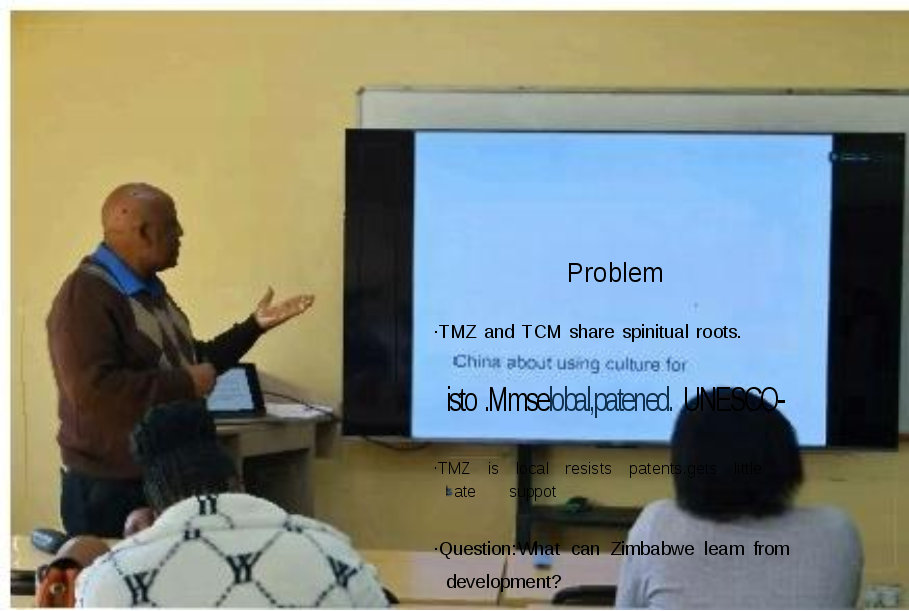
The problem we are investigating here is that TMZ and TCM share spiritual roots.Yet you realize that there are some differences.TCM is global,patented,has ownership,is highly reputed at a global level,known by the World Health Organization,listed by UNESCO,and is also insured.On the other hand,TMZ is local, resists patents,and gets little state support.The question is:what can Zimbabwe learn from China about using culture for development?That's the problem we are trying to investigate.What development aspects can we see from China?
我们在此探讨的问题是:津巴布韦传统医学与中医药共享精神根源。然而,我们也注意 到两者之间存在一些差异。中医药已经全球化,拥有专利,具有产权归属,在全球享有 极高声誉,获得世界卫生组织认可,列入联合国教科文组织名录,并且享有保险保障。 另一方面,津巴布韦传统医学仍局限于本土,抵制专利,获得的国家支持甚少。问题 是:津巴布韦可以从中国学习哪些利用文化促进发展的经验?这正是我们试图探讨的问 题。我们能从中国看到哪些方面的发展经验?
Before I go further,let me check from you,anybody who knows what you understand by traditional medicine. What do you know?What do you understand?Yes,the use of herbs.From our own context,they say trees,we use trees to come up with medicine that can help us physically.Anybody else to add?
在继续之前,我想先问问大家,有谁了解什么是传统医学?你们知道什么?你们怎么理 解?是的,使用草药。在我们自己的语境中,人们说树木,我们利用树木来制作可以帮 助我们身体康复的药物。还有其他人要补充吗?
Yes,if you look outside,you find that the understanding is that people see a tree as medicinal.Most parts of the tree are medicinal:roots,stems,leaves,branches.Every component is medicinal.Meaning that if you extract the bark,crush the leaves,they become medicinal.Do you know examples of some trees which are medicinal in Zimbabwe?Yes, moringa,and mubvamaropa,.Some of these terms are already known.I think I'll translate in biological terms in English,but we are more into the traditional world.Tradition is not static; it can also be modified.That's why you have people crush mango,mix with honey to make medicine.It moves with time.You are laughing,that shows you have knowledge about traditional medicine.Are you a practitioner?That's fine.The tree species mentioned have value.
是的,如果你看看周围,你会发现人们的理解是——看到一棵树就认为它具有药用价 值。树的大部分部位都可以入药:根、茎、叶、枝。每一个组成部分都有药用功效。这 意味着,如果你提取树皮、捣碎叶子,它们就能成为药物。你们知道津巴布韦有哪些具 有药用价值的树木吗?是的,辣木 (moringa)、 穆布瓦马罗帕 ( mubvamaropa)。
有些名称大家已经知道了。我想我会用英文生物学术语来翻译,但我们更关注的是传统 世界。传统不是一成不变的;它也可以被改进。这就是为什么人们会把芒果捣碎,与蜂 蜜混合制成药物。它与时俱进。你们在笑,这说明你们对传统医学有所了解。你们是从 业者吗?没关系。提到的这些树种都具有价值。
Now,if you offer the stereotypes,what's your feeling,your perception about the use of traditional medicine? How do you view someone using traditional medicine?OK, so for me, I teach astronomy in high school. Before I started teaching it,I was very skeptical.But at the moment I realized that it actually has value. Nowadays I understand it was a form of healing.
现在,如果你抛开刻板印象,你对传统医学的使用有什么感受、什么看法?你如何看待 使用传统医学的人?好的,对我来说,我在高中教授天文学。在开始教这门课之前,我 非常怀疑。但后来我意识到它实际上具有价值。如今我理解,那是一种疗愈方式。
There have been perceptions from colonialism that presented traditional medicine as backward.I am sure you know the history of cultural interaction,everything was dismissed.But now indigenous people are looking at tradition differently,and as you say,you see with different eyes.The colonial mentality said no,but these trees have therapeutic value.There is life in the trees.
殖民主义曾带来一种观念,将传统医学描绘成落后的东西。我相信你们了解文化交流的 历史,当时一切都被否定了。但现在,原住民正以不同的视角看待传统,正如你所说, 你们用不同的眼光来看待它,对殖民心态说"不",相信这些树木具有治疗价值,树木中 蕴含着生命。
Traditional medicine has been seen in a negative way.For example,a traditional healer is seen as a witch doctor thus a double combination,negative plus positive,someone who can kill but also sustain. Anyway,there is a long debate.But what we want to show is that there are negative stereotypes,and as a result,it affects why TMZ is local,resists patents,and gets little state support.
但传统医学一直以负面的方式被看待。例如,传统治疗师被视为巫医,这是一种双重组 合——负面加正面,一个既能杀人也能维系生命的人。无论如何,这是一个长期的争论。但我们想表明的是,存在负面的刻板印象,正因如此,它影响了津巴布韦传统医学 为何局限于本土、抵制专利、且获得国家支持甚少的原因。
One reason is that traditional healers don't want their information spoiled by Westerners.They say Westerners will take our stuff.And of course it has already happened.The issue of ownership,for example,Coca-Cola is a formula,patented,and nobody can imitate it.When you register a patent,it becomes your own ownership, recognized like a brand.Traditional medicine does not have patents.The question is:what can we learn from the Chinese experience?
另一个原因是传统治疗师不希望他们的信息被西方人窃取。他们说西方人会拿走我们的 东西。当然,这已经发生了。关于专利的问题,例如,可口可乐是一个配方,拥有专 利,没有人可以仿制。当你注册专利后,它就成为你的专利,像品牌一样受到认可。传 统医学没有专利。那我们能从中国的经验中学到什么?
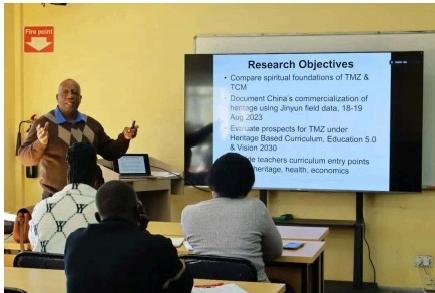
The objectives are designed to compare spiritual foundations of TMZ and TCM,document China's commercialization of heritage using genuine field data from Jinyun,18-19 August,evaluate the prospects for TMZ under the Heritage-Based Curriculum,Education 5.0,and Vision 2030.We are trying to put all our studies into context.
这些研究目标旨在比较津巴布韦传统医学与中医药的精神基础,利用2023年8月18日至 19日在缙云采集的真实田野数据,记录中国对其遗产的商业化进程,并评估津巴布韦传 统医学在基于遗产的课程体系、教育5.0和2030愿景下的发展前景。我们正努力将所有 的研究置于具体语境之中。
If we don't document,what happens?We risk the extinction of knowledge,which gets eroded over time. Chinese medicine is already documented;At Parirenyatwa hospital,there is a TCM counter.People have a choice,you can choose Western bio-medicine or Chinese traditional medicine.But there is no counter for our medicine because it's not internationally recognized.The government may give a license,but international organizations do not recognize it because practitioners have kept it to themselves.So it's difficult to put it on the counter for people's choice,because it may endanger people's lives.
如果我们不做记录,会发生什么?我们面临知识灭绝的风险,知识会随着时间的推移而 被侵蚀。中医药已经被记录下来;在帕里伦雅特瓦医院,就设有中医药柜台。人们有选 择权,可以选择西方生物医学或中国传统医学。但没有我们本国医学的柜台,因为它未 获得国际认可。政府可能会颁发执照,但国际组织并不认可它,因为从业者一直将其秘 而不宣。所以很难把它放在台面上上供人们选择,因为这可能危及人们的生命。
Over time,as you can see,China is already on the table,on the shopping window.So it resists extinction. Why is it important for us to be interested in this?Is it not ours?It is ours.But we are not operating in isolation from global or international treaties.We own them,but we also have to play with the global world to register and be recognized.Zimbabwe is an independent country,a sovereign state,but it belongs to SADC, the African Union,COMESA,etc.Those are bodies through which you register
正如你们所见,随着时间的推移,中医已经被接受,进入了展示橱窗。因此它抵御了灭 绝。为什么我们有必要对此感兴趣?这不是我们的东西吗?这是我们的。但我们并非在与全球或国际条约隔绝的情况下运作。我们拥有它们,但我们也必须参与全球事务,进 行注册并获得认可。津巴布韦是一个独立国家,一个主权国家,它也属于南部非洲发展 共同体( SADC)、 非洲联盟、东南非共同市场 ( COMESA) 等组织。这些正是你可以 进行注册的机构。
During the COVID-19 year,people were dying.But we had our own remedies,which we used,and we saw them being sold in stores.Given the situation,we know that we could use them.Should we have waited for them to tell us to use it?Or was it right for us to wait for their permission?Despite being aligned with those organizations,doesn't that give us immunity to use our own?
在新冠疫情那年,人们不断死去。但我们有自己的疗法,我们使用了这些疗法,并且看 到它们在商店里出售。鉴于当时的情况,我们知道我们可以使用它们。我们应该等人们 告诉我们才能使用吗?还是我们应该等待人们的许可才对?尽管与那些组织保持一致, 但这难道不赋予我们使用自己传统疗法的自主权吗?
What happens is that if it's not internationally organized,it's not known globally.If it were on the shelf,it would be taken because it's international.But for you,it's still confined to local content.You forget that there are other people coming from outside who may want to use it.You may also want to take it to India,to America,and you can't do that without international recognition.So we put it in our pharmacies and use it, but there are challenges because we lack international patents,insurance,and recognition.
实际情况是,如果没有经过国际规范化,它就无法在全球为人所知。如果它摆在货架 上,就会被购买,因为它是国际认可的。但对你来说,它仍然局限于本土范围。你忘了 还有来自外部的人可能想要使用它。你也可能想把它带到印度、美国,但没有国际认 可,你就做不到这一点。所以我们把它放在自己的药房里使用,但这存在挑战,因为我 们缺乏国际专利、保险和认可。
I think it goes back to the issue of training.For Chinese medicine,those practitioners are trained.For us, traditional healers are not necessarily trained in a formal way,and not everyone believes in that.So it cannot be recognized.There are several factors that limit our scope.I think the onus is on us to come out of this closed compartment and be recognized.That's a most important challenge.During the workshop at the University of Zimbabwe,we discussed how we can patent and have international documents.It was interesting to see different perspectives.These objectives provide teachers with curriculum entry points linking heritage,health,and economics.
我认为这又回到了培训的问题。对于中医药,那些从业者都经过培训。而对于我们,传 统治疗师不一定以正规方式接受培训,也不是所有人都相信这一点。所以它无法获得认 可。有几个因素限制了我们的范围。我认为责任在于我们,要走出这个封闭的圈子,获 得认可。这是最重要的挑战。在津巴布韦大学举办的工作坊中,我们讨论了如何进行专 利申请和获得国际文件。看到不同的观点很有意思。这些目标为教师提供了课程切入点,将遗产、健康与经济联系起来。
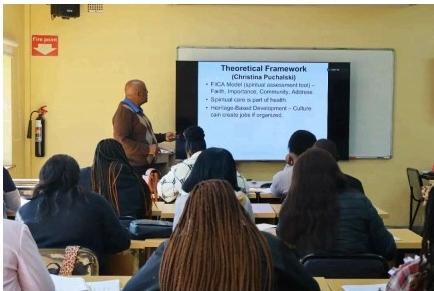
The theoretical framework I am using here borrows from the FICA model:Faith,Importance,Community, Address.This spiritual assessment tool underlies the issue that spiritual care is part of health.So it calls into health-based development aspects.Culture can be seen as potential to create jobs if organized.That's the argument here.
我所采用的理论框架借鉴了FICA°模型:信仰 ( Faith)、 重要性 (Importance)、 社 群 ( Community)、 应对方式( Address) 。 这一精神评估工具的基本观点是,灵性 关怀是健康的一部分。因此,它涉及基于健康的发展层面。如果加以组织化,文化可以 被视为创造就业的潜力所在。这就是这里的核心论点。
Methodology:What kind of methods am I employing?Qualitative,multidisciplinary.I use the method called phenomenology,which speaks of epoche and eidetic intuition.What does this mean? Epoche means entering into the phenomenon without bias.This method was started by a German Edmund Husserl,who says in order to understand a phenomenon,you must bracket your assumptions.I always use an example:there's a church called“Wapusa waPusa”,have you heard about it?You can speak about it from outside,but if you want to really understand,go inside,attend services,get involved in the worship,and then understand.That's what we are using.I'll give another example of internal participation,getting inside the phenomenon.
方法论:我采用了哪些研究方法?质性研究、多学科交叉研究。我使用的方法叫做现象 学,涉及"悬置" ( epoche) 和"本质直观" (eidetic intuition)。这是什么意思?悬置 意味着不带偏见地进入现象本身。这一方法由德国哲学家埃德蒙德 ·胡塞尔开创,他认为 要理解一个现象,必须将你的预设判断"括起来"。我常用一个例子来说明:有一个教会 叫"瓦普萨 ·瓦普萨",你们听说过吗?你可以从外部谈论它,但如果你想真正理解,就要 走进去,参加礼拜,参与敬拜,然后再去理解。这正是我们所采用的方法。
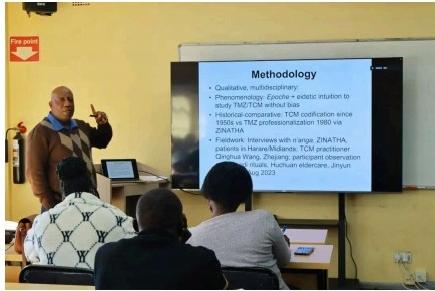
Another method is historical-comparative,looking at history.Another method is fieldwork:interviews with traditional healers,patients,and TCM practitioner.My recent journey,"footsteps"as I explained,is a method of learning by walking.I walked the stone paths of Great Zimbabwe in 2020 and the ritual steps of Huangdi Temple in 2023 during the China-Zimbabwe cultural dialogue.Both places use ancestors and spiritual components,that's what we are interested in:rituals and healing.China uses this heritage to develop villages:Zimbabwe has similar heritage but it's underutilized.not a matter of economic activity.
另一种方法是历史比较法,即考察历史。另一种方法是田野调查:访谈传统治疗师、患 者,以及中医从业者。我最近的经历——正如我所说,"足迹"——是一种行走中学习的 方法。2020年,我行走在大津巴布韦的石径上;2023年,在中津文化对话期间,我踏 访了黄帝庙的仪式步道。这两个地方都运用祖先和灵性元素,这正是我们所关注的:仪 式与疗愈。中国利用这一遗产发展乡村旅游;津巴布韦拥有类似的遗产,但未得到充分 利用,尚未成为经济活动。
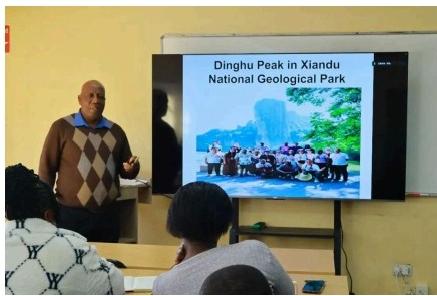
Here is Dinghu Peak in Xiandu National Geological Park.This mountain is sacred and associated with ancestor spirits.I took this one to illustrate the point.I'm sure all of you have been to Great Zimbabwe.This is Mbuya Nehanda statue,the national spirit,in the city.There used to be a tree where they said the spirit was hanging,and it fell a couple of years ago.But anyway,that's the spiritual or national spirit of Zimbabwe.
这是仙都国家地质公园的鼎湖峰。这座山是神圣的,与祖先神灵相关联。我拍了这张照 片来说明这一点。我相信你们都去过大津巴布韦。这是位于城市中的姆布亚 · 内汉达雕 像,她是国家神灵。曾经有一棵树,人们说神灵就栖息在上面,几年前那棵树倒了。但 无论如何,这就是津巴布韦的神灵或国家精神。
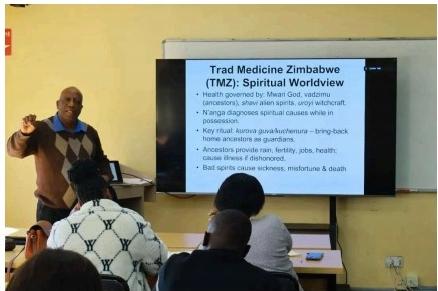
Ancestors provide rain,jobs,fertility as explained,and cause illness if dishonored.They cause sickness, misfortune,and death.Healing practice includes ritual healing,exorcism,and herbs.Exorcism can take place even through a simple process of smoking out evil spirits.For example, kufukira,covering oneself with blankets and choking inside,is a way of smoking disease out.Many people have undergone kufukira.We also use herbs like chifumuro,mufandichimuka, and zumbani for HIV/AIDS and COVID-19.Ancestors guide the healing process.Shavi spirits grant skills or cause illness.Shona taboos protect forests,rivers,and animals, safeguarding the environment.
祖先提供雨水、工作和生育能力,如前所述;若遭到不敬,则会引发疾病。他们会导致 疾病、不幸和死亡。疗愈实践包括仪式疗愈、驱邪和草药疗法。驱邪甚至可以通过简单 的烟熏邪灵过程来完成。例如,库富基拉(kufukira)—— 用毯子蒙住自己,在内部窒 息——是一种将疾病熏出的方式。许多人都经历过库富基拉。我们还使用草药,如奇富
穆罗( chifumuro)、 穆凡迪奇穆卡( mufandichimuka) 和宗巴尼 (zumbani) 来治 疗艾滋病和新冠肺炎。祖先神灵引导疗愈过程。沙维 ( shavi) 神灵赋予技能或导致疾 病。绍纳人的禁忌保护森林、河流和动物,维护环境安全。
The human body is a replica of what exists in nature.If the human body suffers,nature also suffers.There is a connection between the human body and the outside natural world.Zimbabwe is a country shaped like a woman with long hair,with a body,with complexity.The earth needs therapy,and rituals like rain rituals are performed.When nature is dry,there is drought;rain rituals can resuscitate.Nature sends messages through lions,snakes,etc.In short,the body is a reflection of what affects the outside.Human beings and nature are interconnected.Taboos regulate mountains,rivers,no-go areas,otherwise you risk getting lost.
人体是自然界存在的复制品。如果人体受苦,自然界也会受苦。人体与外部自然世界 之间存在着联系。津巴布韦是一个形似长发女性的国家,拥有身体,具有复杂性。大地 需要疗愈,因此会举行祈雨仪式等。当自然界干旱时,就会出现旱灾;祈雨仪式可以使 其复苏。自然界通过狮子、蛇等传递信息。它可以以蛇、狮子或家园中陌生访客的形式 出现,预示着不稳定。长者会举行仪式以确保和平与安宁。简而言之,人体是外部世界 所受影响的一面镜子。人类与自然界相互关联。禁忌规范着山脉、河流和禁入区域,否 则你就有迷路的风险。
The borrowing model of traditional Chinese medicine(TCM) 中医药的借鉴模式
Now,Chinese TCM is philosophical.It comes from Confucianism,Buddhism,and Taoism.Health is a balance of“气”energy and“阴阳”.These are opposites but provide balance.Huangdi,the Yellow Emperor,is honored as a founding ancestor.His temple in Jinyun is now a tourist site.TCM uses Acupuncture,Tai Chi, Meditation,and over 11,146 plants.It is a very important ancestor across genealogies.The Chinese also believe in these ancestor figures.
中医药的哲学性源于儒家、佛教和道教。健康是"气"能量与"阴阳"的平衡。这些是对立 但相互制衡的概念。黄帝被尊为开创性的祖先。他在缙云的庙宇如今已成为旅游景点。 中医药使用针灸、太极、冥想,以及超过11,146种植物。他是跨越谱系的一位非常重要 的祖先。中国人也信奉这些祖先人物。
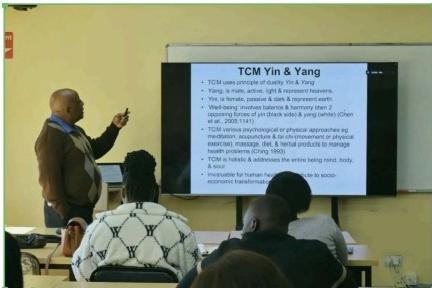
TCM practice and commercialization:TCM is covered by insurance,sold worldwide,protected by patents, and UNESCO-listed.For example,Huoxiang zhengqi shui is sold globally.40%of China's healthcare uses TCM,and WHO supports it.Here is an example of Chinese medicine.TCM uses the principle of duality: Yang is male,active and represents heaven;Yin is female,passive,and represents earth.Well-being involves balance and harmony between these two opposing forces.TCM has various psychological and physical approaches:meditation,acupuncture,tai chi,massage,diet,and herbal products,to manage health problems. TCM is holistic and addresses the entire being,mind,body,and soul,invaluable for human health and contributing to socio-economic transformation.
中医药的实践与商业化:中医药享有保险,在全球销售,受专利保护,并列入联合国教 科文组织名录。例如,藿香正气水在全球销售。中国40%的医疗保健使用中医药,世界 卫生组织也支持它。这是中医药的一个例子。中医药运用二元性原则:阳为男性、主 动,代表天;阴为女性、被动,代表地。健康涉及这两种对立力量之间的平衡与和谐。 中医药有多种心理和身体疗法:冥想、针灸、太极、按摩、食疗和草药产品,以管理健 康问题。中医药是整体性的,关注整个人的身心与灵魂,对人类健康弥足珍贵,并有助 于社会经济转型。
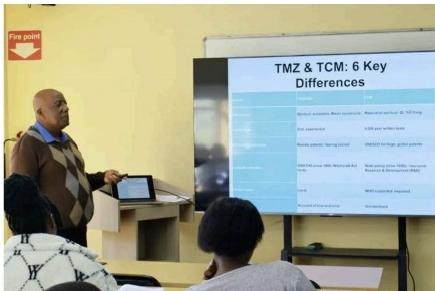
Let's compare rituals in Jinyun and Harare.Jinyun Huangdi Temple national heritage since 2011,tourism,job creation.Rituals include music,dance,and farm offerings.Tourists pay,marketed worldwide,money goes to village development.In Harare,Mbuya Nehanda,statue and speeches.No tickets,no business.Both honor founding ancestors;one funds rural growth,one is only symbolic.Here is a chart that tables the differences between TMZ and TCM.We've spoken about them.I'll give you the presentation so you can go into detail.
让我们比较缙云和哈拉雷的仪式。缙云黄帝庙自2011年起成为国家遗产,发展旅游 业,创造就业。仪式包括音乐、舞蹈和农产祭品。游客付费,面向全球营销,收入用于 乡村发展。在哈拉雷,姆布亚 · 内汉达只有雕像和演讲。不收门票,没有商业运作。两者 都纪念开创性祖先;一个资助农村发展,一个仅具象征意义。这是一张对比津巴布韦传 统医学与中医药差异的图表。我们已经讨论过这些内容。我会把演示文稿发给你们,以 便你们深入了解细节。
Now,collaboration in Zimbabwe:TMZ and TCM,joint training programs and knowledge exchange, integrated clinics and hospitals,herbal medicine research and cultivation,policy recognition and legal framework,private practice partnerships.The big driver is that both systems share a holistic view,treating root causes,using natural remedies,and seeing mind-body balance,so they integrate more easily than with biomedicine alone.
现在谈谈津巴布韦的合作:津巴布韦传统医学与中医药的联合培训项目和知识交流, 综合诊所和医院,草药研究与种植,政策认可和法律框架,私人执业合作。重要的推动 因素是,两种体系都秉持整体观,治疗根本原因,使用天然药物,并重视身心平衡,因 此它们比单独与生物医学更容易整合。
How does this help the Heritage-Based Curriculum?Traditional medicine preserves knowledge,documenting indigenous herbs and healing practices as real local content.It strengthens identity,using local languages, rituals,ubuntu in healthcare,reducing colonial stigma.It trains youth,joint apprenticeships pass skills to the next generationTCM provides global models for health and industry.The result is that both drive HBC's goal:education for production,innovation,and heritage preservation.
这对基于遗产的课程体系有何帮助?传统医学保存知识,将本土草药和疗愈实践记录为 真正的本土内容。它强化认同,在医疗保健中使用本地语言、仪式和乌班图精神(ubuntu), 减少殖民污名。它培养青年,通过联合学徒制将技能传给下一代;中医药 为健康和产业提供全球模式。结果是,两者都推动了基于遗产的课程体系的目标:面向 生产、创新和遗产保护的教育。
Contribution to socio-economic transformation:improve healthcare access,TCM adds low-cost rural care. Build economic sovereignty,local and Chinese herb production cuts imports,creates jobs,boosts exports. Drive innovation,joint research on local plants leads to tested medicines,patents,STEM growth.Reinforce national values,shared focus on prevention,community,balance.
对社会经济转型的贡献:改善医疗可及性,中医药增加低成本的农村医疗服务。建立 经济主权,本土和中国的草药生产减少进口,创造就业,促进出口。推动创新,对本土 植物的联合研究带来经过验证的药物、专利和STEM ( 科学、技术、工程、数学)增 长。强化国家价值观,共同关注预防、社群与平衡。
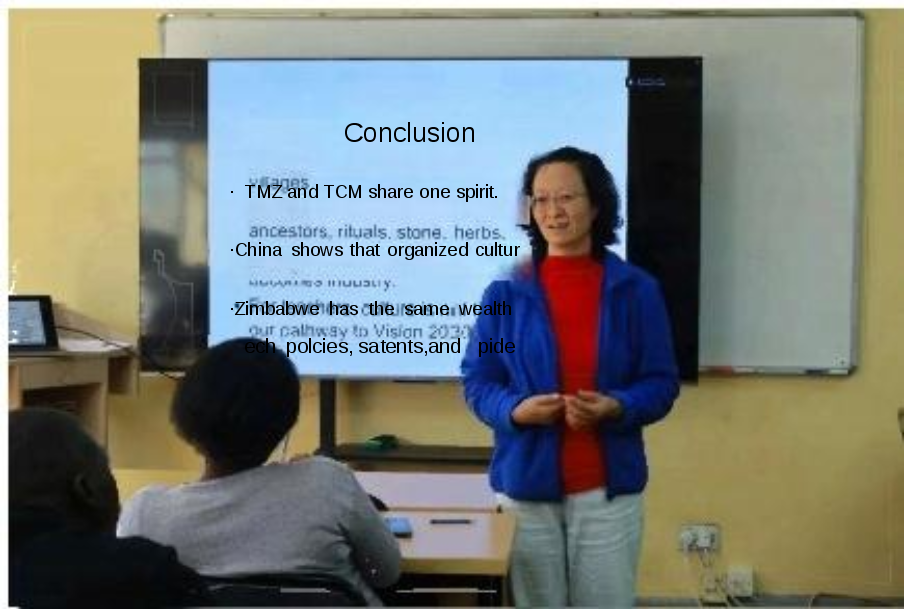
In conclusion,TMZ and TCM share one spirit.China shows that organized culture grows villages.Zimbabwe has the same wealth:ancestors,rituals,stones,herbs.With policies,patents,and pride,heritage becomes industry.For teachers,culture is not the past;it is a pathway to Vision 2030.
总而言之,津巴布韦传统医学与中医药共享同一种精神。中国展示了有组织化的文化 可以发展乡村。津巴布韦拥有同样的财富:祖先、仪式、石头、草药。有了政策、专利 和自豪感,遗产就能成为产业。对于教师而言,文化不是过去;它是通往2030愿景的路 径。
Q&A section 问答环节
Teacher 1:I think our own TMZ is very beneficial.Many people give testimonies of being healed from cancer because we use local herbs.We have many testimonies of people who have been cured.Even some of you, myself,I'm also a product of those medicines.So there are many silent testimonies.But we don't speak loudly about it;it's kept to believers.That is important.
教师1:我认为我们自己的津巴布韦传统医学非常有益。许多人作证说,因为使用了本 土草药,他们的癌症被治愈了。我们有很多被治愈者的证词。甚至你们中的一些人,包 括我自己,也是这些药物的受益者。所以有很多沉默的证词。但我们没有大声宣扬;它 只在信奉者之间流传。这一点很重要。
Prof.Shoko:Let me give a quick example.There was a lecturer in education,Dr.Mashava,who discovered his own medicine from bushes and trees,and developed medicines for HIV/AIDS.He registered and was given funding by World Health organization for clinical trials.He would send patients'blood samples to hospitals for testing,and the results indicated that the drugs had potential to treat symptoms. Unfortunately,he passed away.Traditional surgery also exists,they open patients
肖科教授:让我快速举一个例子。有一位教育学讲师马沙瓦博士,他从灌木和树木中发 现了一种药物,并据此研发了治疗艾滋病的药物。他进行了专利注册,并获得了世界卫 生组织的资助进行临床试验。他会将患者的血液样本送到医院检测,结果表明这些药物 具有治疗症状的潜力。不幸的是,他已经去世了。传统外科手术也存在,他们会为病人 开刀。
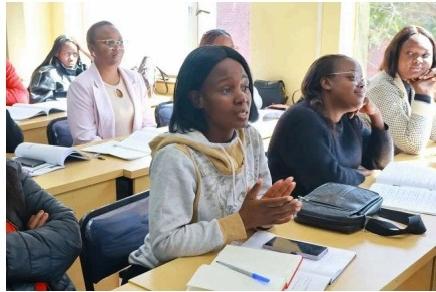
Teacher 2:What I was told,for example,that elephant dung can help pregnant women during delivery,told by my grandmother,who was told by her great-grandmother.Whose responsibility is it to teach that?And maybe if women use a certain amount,it can help delivery.Who owns that knowledge?
教师2:我曾被告知,象粪可以帮助孕妇分娩,这是我祖母告诉我的,而她又是从她的 曾祖母那里听来的。但是谁来负责传授这些知识呢?使用多大量的象粪能帮助分娩,这 样的知识谁来传授呢?
Prof.Shoko:The person who takes initiative can register it.Some things don't have an owner,they are community knowledge.But someone can take initiative and register through the Ministry of Health,and eventually the WHO.Yes,locally there are people who specialize.Women can also assist.
肖科教授:主动采取行动的人可以将其注册。有些东西没有所有者,它们属于社群知 识。但有人可以主动通过卫生部注册,最终通过世界卫生组织注册。当地应该会有一些 人了解这样的知识。某些女性也可以提供帮助。
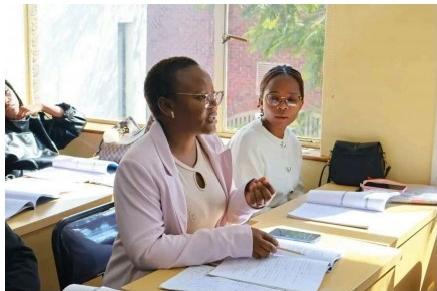
Teacher 3:For me,I’m close to rural areas.Most people don't go to Mount Zenith Hospital;they just go to the big tree and get help.They still use water from rivers because they believe it's healthy.
教师3:以我而言,我家靠近农村地区。大多数人生病不去泽尼斯山医院;他们只是去 大树那里寻求帮助。或者他们使用河水治病,因为他们相信河水有益健康。
Prof.Shoko:That is the natural environment that sustained.There used to be a tree that provided food- people would go and ask for food.Those are stories that connect,but they are not studied.That shows the connection between nature and human beings.
肖科教授:那是维系生命的自然环境。有传说说一棵树能提供食物——人们会去祈求食 物。这些都是相互关联的故事,但没有被研究。这显示了自然与人类之间的联系。
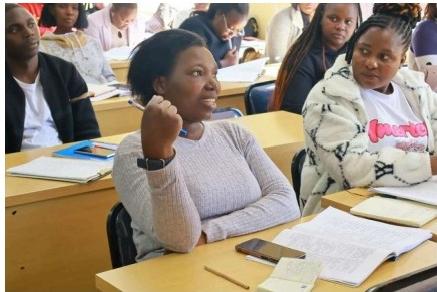
Teacher 4:I am a person really confused.My question is:is it OK for us to continue taking traditional medicine?
教师4:我真的很困惑。我的问题是:我们还能继续服用传统药物吗?
Prof.Shoko:There's a challenge,especially for flu,one is supposed to take five leaves,that's the correct dose.But we want fast results,we take ten or twelve,which can be poison.The challenge is dosage,we don't know the correct dose.Even with the elephant dung,if you consume too much,it's harmful.So dosage is a very critical issue that the WHO is concerned about.Side effects,some herbs can be toxic and damaging,and you can die.So,there is need for control,regulation,drug control,and registration.We need checks and measurements.Traditional medicine often lacks measurement,no glass or test tube.This creates problems.So,we need regulation and caution.
肖科教授:这里存在一个挑战。比如治疗流感时,应该服用五片叶子,这才是正确的剂 量。但我们想要快速见效,就服用十片或十二片,这可能成为毒药。挑战在于剂量,我 们不知道正确的剂量。即使是象粪,如果摄入过多,也是有害的。因此,剂量是世界卫 生组织非常关注的关键问题。副作用方面,有些草药可能具有毒性并造成损害,甚至可 能导致死亡。所以,需要管控、监管、药品控制和注册。我们需要检测和测量。传统医 学往往缺乏测量,没有玻璃杯或试管。这就造成了问题。因此,我们需要监管和谨慎。
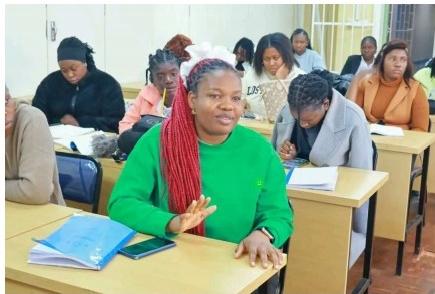
We cannot say take it or leave it,it's now an individual discretion.There must be dialogue between traditional medicine and science.Also,there is faith healing from spiritual prophets,like Magaya and others.If you fall sick,you may go to a traditional healer,a prophet,or a hospital.Even if a person is diagnosed with cancer or HIV,there is always a cultural or spiritual explanation.This is the double explanation,we live in a double world with double explanations for everything.
我们不能简单地说吃或不吃,这现在是个人的判断。传统医学与科学之间必须展开对话。此外, 还有来自灵性先知的信仰疗愈,比如马加亚等人。如果你生病了,你可以去找传统治疗师、先知 或医院。即使一个人被诊断出癌症或艾滋病,总会有文化或灵性层面的解释。这就是双重解释, 我们生活在一个双重世界中,对一切都有双重解释。
Teachers,how do we integrate such deep knowledge into teaching and learning?This draws you to understand more of traditional medicine so that you can give children the best education.This is where the curriculum is driving.We have technology at the university,we now have a degree in drug discovery,and more than 14 medicines have already been discovered and are on pharmacy shelves.This kind of knowledge should be researched,and medicine invented so people can buy and keep at home.There is also research on antivenom, collaboration between traditional and Western science.So,something is going on.
老师们,我们如何将如此深奥的知识融入教学和学习中?这促使你更深入地了解传统医学,以便 给予孩子们最好的教育。这正是课程所推动的方向。我们大学拥有技术,现在设有药物发现学 位,已经有超过14种药物被发现并摆上药房货架。这类知识应该被研究,并发明出药物,让人们 可以买回家备用。还有关于抗蛇毒血清的研究,传统医学与西方科学之间的合作。所以,一些事 情正在进行中。
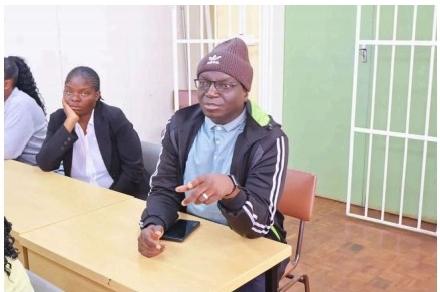
Prof.Li:Thank you,Professor Shoko,for this enlightening presentation!From African herbal healing to traditional Chinese medicine,Professor Shoko has vividly demonstrated the transformative potential of China-Africa civilizational dialogue.Tradition is not a museum specimen,but living knowledgee.This is precisely the spirit of "Footsteps Across China and Africa."Thank you once again,Professor Shoko,and thank you all for joining us.We look forward to seeing you at our next lecture!
李老师:谢谢肖科教授,带来这场启迪人心的演讲!从非洲草药疗愈到中医药,肖科教 授生动地展示了中非文明对话的变革潜力。传统不是博物馆的标本,而是鲜活的知识。 这正是"行走于中非之间"的精神所在。再次感谢肖科教授,也感谢各位的参与。我们期 待在下一次讲座中与大家再见!
图片及录音整理周兴祥 编译李丽琴