
Exploring Language,Culture,and Development—Zimbabwe's Perspective 语言、文化与发展探索—津巴布韦视角
2026-07-10
点击量: 次浏览
Introduction开场介绍
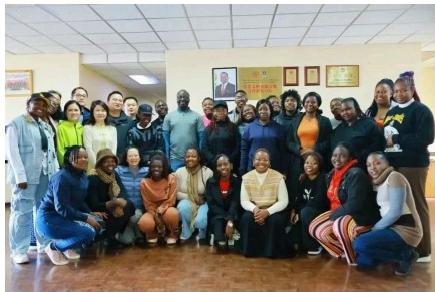
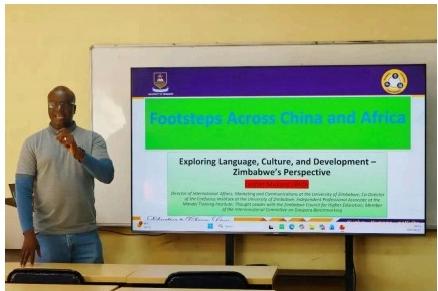
It is my great pleasure to welcome you all to this distinguished lecture.We are honored to host Dr.Mukaro,a figure many of you already know well.For those less familiar,Dr.Mukaro is the Director of International Affairs,Marketing and Communications at the University of Zimbabwe,as well as the Co-Director of our Confucius Institute at thee University of Zimbabwe(CIUZ)
我非常荣幸地欢迎各位出席本次名家讲座。今天,我们有幸邀请到穆卡罗博士 ( Dr.Mukaro), 相信在场的 许多人对他已经非常熟悉。对于那些还不太了解他的朋友,请允许我介绍一下:穆卡罗博士现任津巴布韦 大学国际事务、市场与传播部主任,同时也是津巴布韦大学孔子学院 (CIUZ) 的外方院长。
Beyond these roles,he serves as an independent professional associate at the Mandel Training Institute and contributes as a thought leader with the Zimbabwe Council for Higher Education.His recent participation in the 2024 Visiting Young Sinologist Programme in Gansu,China highlights his recognized expertise in bridging Zimbabwean heritage with Chinese cultural engagement.
除此之外,他还担任曼德尔培训学院的专业合伙人,并作为政策顾问为津巴布韦高等教育委员会献计献 策。他参加了2024年在中国甘肃举办的"青年汉学家研修计划",这充分体现了他将津巴布韦文化遗产与中 国文化交流相融合的专业造诣已获得广泛认可。
Today,Dr.Mukaro will present "Footsteps Across China and Africa:Exploring Language,Culture and Development ——A Zimbabwean Perspective."His lecture willexamine how heritage,education,and global exchange intersect;the expanding role of Chinese language learning across Africa;and how cultural values such as discipline and collectivism can drive development while safeguarding local identity.Please join me in warmly welcoming Dr.Mukaro.
今天,穆卡罗博士将带来题为"行走干中非之间:语言、文化与发展探索 — 津巴布韦视角"的讲座。他将探讨 遗产、教育与全球交流如何交汇;汉语学习在非洲不断扩展的作用;以及纪律、集体主义等文化价值观如何在 尊重本土身份的同时推动发展。请大家以热烈的掌声欢迎穆卡罗博士!
1.The historical evolution and current situation of China-Africa exchanges
1.中非交流的历史演进与现状
Thank you for that generous introduction.I would also like to acknowledge our medical colleagues;their consistent support and participation in our activities are deeply appreciated.Together with the Confucius Institute and the University of Zimbabwe Services,we are planning a major collaborative initiative with the Chinese medical team—an announcement will follow soon,and we warmly invite you to be part ofit.
感谢您的盛情介绍。我也要感谢医疗队朋友们的出席。大家知道,获得他们的帮助是一种巨大的荣幸。他 们一直坚持参加我们的各项活动。目前,孔子学院、津巴布韦大学校医院与中国医疗队正在筹划一项重大 合作项目——相关消息很快会正式公布,我们诚挚地邀请大家届时共同参与。
Standing before teachers always feels like being back in the classroom.Teaching is my profession,and it remains at the core of my identity.Beyond the titles Professor Li kindly mentioned,my role as Director of International Marketing means that every day I carry the responsibility of advancing the University of Zimbabwe's brand—an endeavor that requires both dedication and creativity
站在老师们面前,总让我感觉仿佛回到了教室。教书是我的本职,也是我身份认同的核心。除了李老师刚 才介绍的那些头衔之外,作为国际市场推广部主任,我每天都在承担着推广津巴布韦大学品牌的责任 — 这是一项既需要奉献精神又需要创造力的工作。
When Professor Li proposed this lecture series under the theme “Footsteps Across China and Africa,”I immediately recognized its significance.What brings China and Africa together?What resources,histories,and futures do we share? These are the questions we must explore.The Confucius Institute,established here as part of a global network,embodies this mission:to connect Africa with the world,and to foster understanding through language and culture.
当李老师告诉我,我们要在这里举办一系列讲座,主题是"行走于中非之间"时,我立刻意识到其中的深远 意义。是什么将中国与非洲联系在一起?我们在资源、历史与未来方面共享什么?这些都是我们必须深入 探索的问题。孔子学院作为全球网络的一部分在此设立,正是肩负着这一使命:将非洲与世界连接起来, 通过语言与文化促进相互理解。
Anyway,we are trying.We are here at the Confucius Institute,one of the centers across Africa and the world.We connect with Africa,and we connect with the wider world.But what exactly do we want to achieve?I will briefly touch on that,often through anecdotes from my own story.
我们身处孔子学院,它是遍布非洲及世界各地的众多中心之一。我们与世界相连,与非洲相连。但我们究 竟想实现什么?这是我今天要简要探讨的,而且我会穿插许多自己的故事。
As you can see,I highlighted in red:the PhD gown across the world is traditionally red.If someone tells you,“I am a PhD holder,"but wears a green gown,you should be doubtful.If they wear a red gown,that is what you typically see in the West.I earned my PhD in China,in Linguistics and Applied Linguistics,in 2012,after spending four years there. Much ofwhat I share today is drawn from my own story and experiences.In June 2012,young,energetic,vibrant,and happy,I graduated.In China,graduation includes a pre-graduation ceremony the day before,followed by the full ceremonial day.By then,all the pictures had already been taken.
正如你们所见,我用红色标出了:全世界的博士服传统上都是红色的。如果有人跟你说"我是博士",却穿 着绿色袍子而不是西方常见的那种红色袍子,那就很可疑。我在中国获得了语言学与应用语言学博士学 位,那是在2012年 ,在中国待了四年之后。所以今天我要分享的很多内容,都源于我自己的故事和亲身经 历。2012年6月,我刚毕业,年轻、精力充沛、充满活力、兴奋异常。 在中国,毕业前一天会举行预毕业 典礼,然后才是正式的毕业典礼,所以照片都提前拍好了的。
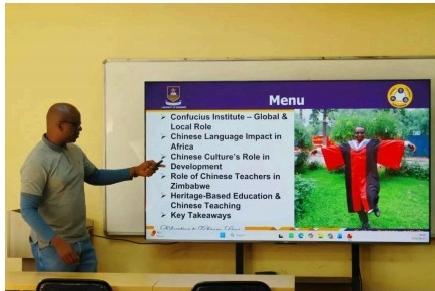
So,what am I going to do here?I will be talking about the Confucius Institutes—their global and local roles.I will also discuss China,the impact of the Chinese language in Africa,and,more specifically,in Zimbabwe.What has been the role of the Chinese language in Zimbabwe?How many of us can confidently say,"If there were no Chinese language teaching.…”?These are the kinds of examples I will be sharing today.
那么我今天要讲什么呢?谈谈孔子学院——它在全球和本地的作用;谈谈中国、汉语在非洲的影响,当然 还有更贴近津巴布韦的内容。汉语在津巴布韦起到了什么作用?我们中有多少人能自信地说:"如果没有汉 语教学……"?我今天会一直举这类例子。
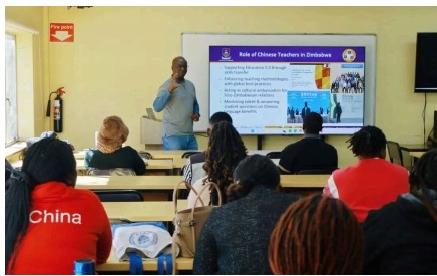
You are meant for this,so you are getting this together.What is the role of culture and what Professor said? what is the role of culture in development?When you get to China,when they start to tell you anything about their architecture,anything about their development,anything about their socioeconomic development,their technology,they say culture is at the center.So what does that mean?What about Africa?What about Zimbabwe?The role of Chinese teachers in Zimbabwe.Last time Mr.Zhaoke was asking you to say:"What do you tellyour students when they ask you what is the importance of learning Chinese?"And I think it was a question worth taking home,reflecting,so that you can have at least maybe five good answers which you can tell your students.But we are just going to look at your role now,not only in the classroom but also outside the classroom.
这些内容很适合你们,所以你们要理解这些内容。文化的作用是什么?老师们都说了什么?文化在发展中 的作用是什么?当你到了中国,当他们开始告诉你关于他们的建筑、社会经济发展、技术时,他们会说文
化是核心。那是什么意思呢?非洲呢?津巴布韦呢?中文教师在津巴布韦的角色又是什么呢?上次赵科先 生问你们:"当学生问学习汉语的重要性时,你们怎么回答?"我认为这是一个值得带回家反思的问题,这 样你们至少可以准备五条好的答案告诉学生。但我们现在不仅要看你们在课堂上的角色,还要看你们在课 外的角色。
2.Heritage-based Education and Localization
2.遗产教育与本土化
We then turn to the subject of heritage-based education and Chinese teaching.This is a particularly challenging topic,in my view,because when it was first announced,there was extensive discussion about the introduction of a heritage-based curriculum.The matter was eventually taken to the Minister of Education, who met with representatives from trust schools—nearly all of you come from these institutions,with only about 2%representing public schools.During that meeting,leaders were informed that beginning in 2027,all schools will be required to adopt the heritage-based curriculum.
接下来我们谈谈基于遗产的教育与中文教学。我认为这是一个非常棘手的话题,因为当它最初被宣布时, 关于引入基于遗产的课程体系已经有过广泛讨论。此事最终提交到了教育部长那里,部长与私立信托基金 学校的代表们举行了会议——在座的各位几乎都来自这些学校,只有大约2%代表公立学校。在那次会议 上,领导们被告知:从2027年起,所有学校都将被要求采用基于遗产的课程。
The curriculum is widely regarded as strong,but the question remains:does it include Chinese studies?That is something we must clarify,as it has significant implications for your future.Then,this year,another decisive announcement was made:Cambridge examinations will no longer be the standard option.If one wishes to sit for Cambridge exams,special approval will be required.What are the implications of this shift?
I believe I was able to touch on that,and with time we will be able to explore its full impact.
这套课程本身被认为很完善,但问题依然存在:它是否包含汉语研究?这是我们必须澄清的问题,因为它 对你们的未来有重大影响。然后,今年又发布了一项决定性公告:剑桥考试将不再作为标准选项。如果有 人想参加剑桥考试,需要获得特别批准。这一转变意味着什么?我相信我已经触及了这个问题,假以时 日,我们将能够全面探讨它的深远影响。
And of course,we must ask ourselves:what are the takeaways?If you cannot recognize me from these pictures,it may be because I was too young at the time,or perhaps the camera quality was poor.Remember, some of these photos date back to 2008.You might say Facebook existed in China then,but the cameras? There were no smartphones with swipe screens yet.
当然,我们要问问自己:收获是什么?如果你们从这些照片中认不出我,那要么是我当时太年轻,要么是 当时的相机质量不好。请记住,有些照片可以追溯到2008年。你们可能会说那时候中国有Facebook, 但相 机呢?那时还没有带滑动屏幕的智能手机。
Back in those days,HTC was the pioneer.How many of you remember HTC?It was the first of its kind.The only challenge with those early HTC models was the battery life.With such a large screen,the technology had not yet caught up,so the battery drained quickly.You had to keep the charger in your pocket and recharge constantly.
那时候,HTC 是先行者。你们有多少人还记得HTC? 那些早期HTC机型唯一的挑战是电池续航。屏幕那么 大,技术还没跟上,所以电池很快就没电了。你得把充电器放在口袋里,不停地充电。
We often abandoned digital cameras,removed the SD card,and inserted it into the computer to view our photos.That was the routine—no instant uploads,no seamless sharing,just a process of transferring files step by step.
我们那时常常把数码相机的SD卡取出来,插到电脑里才能查看照片。这就是当时的流程——没有即时上 传,没有无缝分享,只能一步一步地传输文件。
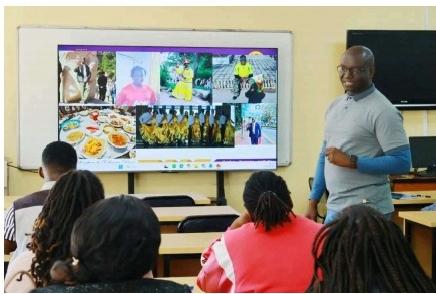
Why do I have this?The first photo,on the top left,dates back to 2008.Then came the others,including one taken during a performance at an international culture festival.It was part of an international culture day we were celebrating,and we spent a week in camp preparing for it.
我为什么保留这些照片?左上角第一张可以追溯到2008年。然后是其他照片,包括一张在国际文化节上表 演时拍摄的。那是我们庆祝国际文化日的一部分,我们花了一周时间在营地做准备。
Unfortunately,I wasn’t able to preserve the videos.Back then,recording meant using a digital camera,which was very different from today's phones that can capture and share video instantly.At that time,technology was limited—you had to rely on your camera,transfer files manually,and the process was far less seamless than it is now.
可惜我没能保存那些视频。那时候录像意味着使用数码相机,与现在手机可以即时拍摄和分享视频完全不 同。当时技术有限 你得依赖相机,手动传输文件,整个过程远不如现在这么顺畅。
We were participating in cultural festivities in China,and of course,cuisine was a central part of the experience—complete with chopsticks and traditional dishes.I also tried to take on the role of“King M”with the song Genas,which was quite popular at the time.In the photo on the top right,you can see me proudly dressed in my national flag,even wearing a T-shirt emblazoned with it.That moment was all about identity一 expressing who we were and where we came from.
我们在中国参加文化庆祝活动,当然,美食是体验的核心部分——有筷子和传统菜肴。我还试着扮演"歌王 M" 的角色,演唱当时很流行的歌曲《Genas》。在右上角那张照片里,你们可以看到我自豪地身披国旗,甚 至穿着印有国旗的T恤。那一刻完全关乎身份认同 表达我们是谁,我们来自哪里。
Let's rewind a little to 2008.At that time,we were in Hong Kong,promoting the value of Chinese learning and teaching in Africa.It was part of the broader China-Africa exchange.But ifwe go back even further,to 2007,some of you may recall this story.While defending my Master's thesis,I was nominated to travel to China for three months of training.I was thrilled—my passport had never been used and was close to expiring without a single stamp.
让我们稍微回顾一下2008年。那时我们在香港,专业地宣讲在非洲学习和教授汉语的价值。这是更广泛的 中非交流的一部分。但如果再往前追溯到2007年,你们中的一些人可能还记得这个故事。在我进行硕士论 文答辩时,我被提名去中国参加三个月的培训。我非常激动——我的护照从未使用过,快过期了,上面一 个章都没有。
Together with colleagues from Msasa Training Bureau,we flew to Beijing International Airport. Unfortunately,there was a communication breakdown.We had informed them that we were leaving Zimbabwe on Saturday and arriving Sunday,but it seems they misinterpreted this and expected us on Monday.So when we landed,there was no one waiting.We stood there,uncertain,watching the crowd disperse as the evening grew darker.The lights dimmed,and still,no one came.
我和来自Msasa培训局的同事们一起飞往北京国际机场。不幸的是,出现了沟通失误。我们告知对方我们是周 六离开津巴布韦、周日抵达,但似乎他们误解了,以为我们周一才到。所以当我们降落时,没有人接机。我们 站在那里,茫然无措,看着人群散去,天色越来越暗。灯光渐暗,仍然没有人来。
Fortunately,we spotted a Black man and approached him:"Hey,where are you from?”He replied,"From Sierra Leone.”He spoke English,which was a relief.He mentioned that he thought he had seen someone from the Zimbabwean embassy,so I decided to try my luck there.Eventually,someone from our embassy arrived and said,"You guys are lost—what happened?I can't do much except help you book a hotel."
幸运的是,我们看到一个黑人哥们,就走过去问:"嘿,你从哪来?"他回答:"塞拉利昂。"他会说英语, 这让我们松了一口气。他提到他好像看到津巴布韦大使馆的人了,所以我决定去大使馆碰碰运气。最终, 我们大使馆的一个人来了,说:"你们迷路了,发生了什么?我帮不了太多,只能帮你们订酒店。"
That sounded fine,but by then it was already eleven at night,and the hotel told us,"No,we are not open."So we walked down the street.One good thing about China is that almost every street corner has a restaurant, some of them open 24 hours.But we didn't know Chinese food,so we kept going from restaurant to restaurant,searching for menus with pictures—that was the only way we could figure out what to order.
订酒店听起来不错,但那时已经晚上十一点了,酒店告诉我们:"不,我们(餐厅)不营业了。"于是我们 沿街走。中国的好处是几乎每个街角都有餐馆,有些24小时营业。但我们不熟悉中国菜,所以一家一家餐 馆找,寻找带图片的菜单 是我们唯一能弄清楚怎么点菜的方式。
Finally,we ended up at a hotel restaurant that was quite expensive because they were serving Beijing duck. We had no idea what Beijing duck was.As we flipped through the menu,we thought we were ordering a full meal,but when the dish arrived,it was just the crispy skin.We were confused—we thought the rest of the duck would come later.The chef left,and we tried to call him back,but the language barrier made communication impossible.
最后,我们到了一家酒店餐厅,那里很贵,因为他们供应北京烤鸭。我们根本不知道北京烤鸭是什么。我 们翻阅菜单时,以为自己点的是一顿完整的餐食,但当菜端上来时,只有酥脆的鸭皮。我们困惑了 我 们以为鸭子的其余部分会随后上来。厨师离开了,我们试图叫他回来,但语言障碍让沟通完全不可能。
Luckily,a German man sitting with his girlfriend noticed our struggle and offered to help.We explained,"We ordered this big duck,but they only gave us the skin.Can you help us get the meat and rice?”He shook his head and said,"No,gentlemen,this is it.If you want the bones or the rest of the duck,you have to pay again —it's not included."We were stunned.We had already paid about twenty dollars for the Beijing duck,and yet we went to bed hungry that night.
幸好,一位带着女朋友的德国男士注意到我们的窘境,主动提供帮助。我们解释说:"我们点了这只大鸭 子,但他们只给了我们鸭皮。你能帮我们把肉和其他菜要过来吗?"他摇摇头说:"不,先生们,这就是全 部。如果你要骨头或鸭子的其余部分,你得再付钱——那是不包含在内的。"我们惊呆了。我们已经花了大 约二十美元买北京烤鸭,那天晚上我们还是饿着肚子睡觉了。
What does that tell us?We have crossed a very huge boundary here from Africa to China.And such kind of shocks,we call them culture shocks,they are bound to happen.Why?The bridge is so wide.
这告诉我们什么呢?我们从非洲来到中国,跨越了巨大的文化边界。这种冲击我们称之为文化冲击,是难 免的。为什么?因为鸿沟太宽了。
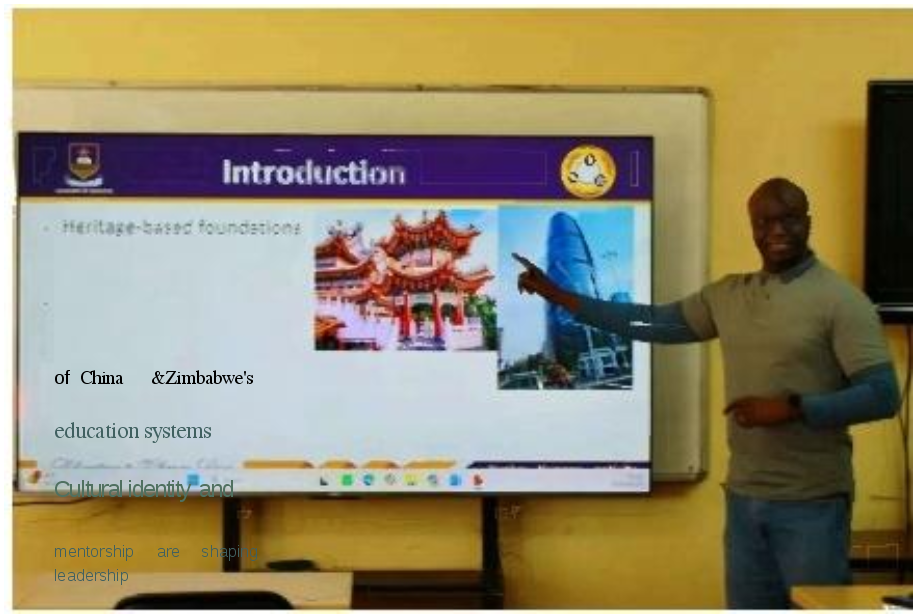
This is where the Chinese Confucius Institute comes in,with the mission of bridging the gap in a world that is rapidly shrinking.The goal is to foster mutual understanding between China and Africa.Beyond education, trade,economic development,and political relations,there is a vital need for people-to-people exchange.
这时孔子学院就出现了,它的使命是:缩小鸿沟,因为世界正在变小。目标是促进中国与非洲之间的相互 理解。除了教育、贸易、经济发展和政治关系之外,人文交流有着至关重要的作用。
Such exchange can only happen when we narrow the divide—when we build bridges and open gates that allow cultures to meet and learn from one another.That is precisely what we are striving to achieve now: creating pathways for deeper connection,dialogue,and shared identity between China and Africa.
这种交流只有在我们缩小鸿沟时才能发生——我们搭建桥梁、打开大门,让文化相遇并相互学习。这正是 我们现在努力要实现的:为中国与非洲之间更深层的联系、对话和共享身份创造路径。
The heritage-based foundations of both China and Zimbabwe are deeply reflected in their histories.In China, as anyone who has visited or studied the culture knows,architectural design is a defining feature—structures rise upward,emphasizing vertical growth.In Zimbabwe,however,traditional settlement patterns were different.Historically,people spread outward rather than upward,favoring wide spaces,much like the elephant that symbolizes Africa:vast,expansive,and grounded.This reflects a cultural preference for breadth and abundance,tied to sustenance and community.
中国和津巴布韦的遗产基础在历史中得到了深刻反映。在中国,任何去过或研究过中国文化的人都知道, 建筑设计是一个标志性特征——建筑向上延伸,强调垂直发展。然而在津巴布韦,传统的居住模式不同。 历史上,人们向外扩展而不是向上建造,喜欢广阔的空间,就像象征非洲的大象一样:庞大、开阔、扎根 大地。这反映了一种对广度和丰裕的文化偏好,与生计和社区紧密相连。
The Chinese,on the other hand,were forward-thinking and conscious of space limitations long before it became a global issue.They anticipated that land would eventually be scarce,and so their architectural heritage emphasized building upward.Today,as Zimbabwe faces challenges of space and urban expansion, we see the consequences of having spread outward instead of upward.
另一方面,中国人早在空间成为全球性问题之前,就具有前瞻性并意识到空间限制。他们预见到土地最终 会稀缺,因此他们的建筑遗产强调向上建造。今天,当津巴布韦面临空间和城市扩张的挑战时,我们看到 了向外扩展而非向上建造的后果。
But the point is not just architecture—it is heritage.Our education systems inevitably draw from these cultural foundations.Heritage-based education in Zimbabwe is not something entirely new;it is a reinforcement of what has always existed.China has long embraced heritage-based approaches in its curriculum,and Zimbabwe's current system reflects similar principles,adapted to our own context.At the heart of both is the preservation of cultural identity,ensuring that education is not only about knowledge but also about who we are.
但关键不仅仅在于建筑——而在于遗产。我们的教育体系不可避免地汲取了这些文化基础。津巴布韦的基于遗 产的教育并非全新事物;它是对一直存在的东西的强化。中国长期以来在课程中拥抱基于遗产的方法,津巴布 韦当前的体系也反映了类似的原则,只是适应了我们自己的语境。两者的核心都是保护文化身份,确保教育不 仅仅是关于知识,也是关于我们是谁。
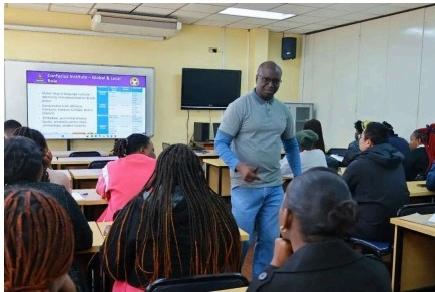
Who can truly define our culture?I have tried to do so,because culture is something we can find embedded in our education.The challenge is that many people do not fully recognize it.Yet once you grasp cultural orientations,you begin to grow—membership and belonging are what nurture development.Without community,there is no growth.
谁能真正定义我们的文化?我曾尝试这样做,因为文化是我们可以在教育中找到的东西。挑战在于许多人 并没有完全认识到它。然而一旦你掌握了文化取向,你就开始成长——成员身份和归属感是培育发展的土 壤。没有社区,就没有成长。
This is why we often say,"Bring your students to the Bridge Competition."In essence,it means mentorship and stewardship—passing knowledge and values through shared experiences.Let me give you an example from China.They developed what they call science parks or innovation hubs.We are now following that model here as well.The University of Zimbabwe has an Innovation Hub and an Agro-Industrial Park.
这就是为什么我们常说:"带你的学生参加汉语桥比赛。"本质上,这意味着导师制和传承——通过共享经 验传递知识和价值观。让我举一个中国的例子。他们开发了所谓的科学园区或创新中心。我们现在也在效 仿这一模式。津巴布韦大学有一个创新中心和农业工业园。
What were these parks meant for?They were designed as spaces where students and young people could express their creativity in ways that could be monetized.Once creativity is monetized,it transforms into innovation.That is why China has produced so many brilliant minds in technology and development— because their system nurtured creativity through these “science boxes.”It is part of their cultural heritrge, and now it is becoming part of ours too.
这些园区是用来做什么的?它们被设计为空间和场所,让学生和年轻人可以以能够商业化的方式表达创造力。 一旦创造力被商业化,它就转化为创新。这就是为什么中国在技术和发展领域培养了这么多杰出人才——因为 他们的系统通过这些“科学盒子”培育创造力。这是他们文化遗产的一部分,现在也正在成为我们的。
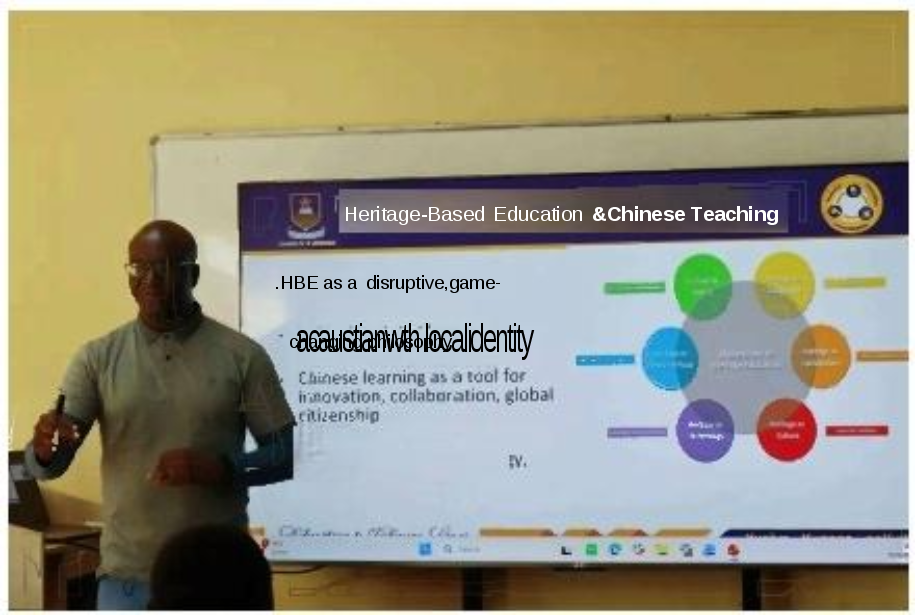
I hope I am speaking to some of you here.History tells us that the Chinese came to Africa long ago.This was not simply about “looking East”—it was about genuine interaction.They began arriving in Africa,including Zimbabwe,through trade.Evidence suggests that Chinese traders were present as far back as the 17th or 18th century,and certainly by the 19th century.
我希望我所说的能触动你们中的一些人。历史告诉我们,中国人很久以前就来到非洲。这不是简单的"向东 看"——而是真正的互动。他们开始通过贸易来到非洲,包括津巴布韦。有证据表明,中国商人早在17或18 世纪就存在了,到19世纪肯定已经存在。
This demonstrates intent:China coming to Africa,and Africa going to China.For example,Zimbabweans traveled to China in the late 1950s and early 1960s for training,particularly in connection with the liberation struggle and political relations.
这表明了意图:中国来到非洲,非洲也走向中国。例如,津巴布韦人在20世纪50年代末和60年代初前往中 国接受培训,特别是与解放斗争和政治关系有关。
Today,however,China's presence in Africa has taken on a new dimension.Much ofit has been organized and institutionalized through the Confucius Institute.This has become a structured movement of resources,labor, human capital,and knowledge—an effort to strengthen ties not only in education but also in cultural exchange and mutual understanding.
然而今天,中国在非洲的存在已经呈现出新的维度。其中大部分通过孔子学院得到了组织和制度化。这已成为 资源、劳动力、人力资本和知识的有组织运动——一项不仅加强教育联系,而且加强文化交流和相互理解的努 力。
The Confucius Institute provides an interesting point of comparison.At present,it is by far the largest institution for language education worldwide.While the British Council remains significant,the number of students actively learning Chinese surpasses those studying English under its programs.To put this into perspective,there are around five million active learners of Chinese globally.
孔子学院提供了一个有趣的比较点。目前,它是迄今为止全球最大的语言教育机构。虽然英国文化协会仍 然重要,但积极学习中文的学生数量超过了在其项目下学习英语的人数。具体而言,全球大约有五百万积 极学习中文的人。
What about Zimbabwe?The number of active learners here is substantial,supported by teachers who continue to expand the reach of Chinese language education.Alliance Francaise,which promotes French,also has many centers and was once a vibrant hub for cultural activities such as jazz and poetry.Yet today,its influence seems to have diminished.Why?The shift has largely been due to the rise of Chinese language and cultural programs.
津巴布韦呢?这里积极学习者的数量相当可观,而中文教师们的支持,又不断扩大汉语教育的覆盖范围。 推广法语的法语联盟也有许多中心,曾经是爵士乐和诗歌等文化活动的活跃中心。然而今天,它的影响力 似乎已经减弱。为什么?这种转变很大程度上是由于汉语和汉语文化项目的兴起。
The difference lies in the approach.Institutions like Alliance Francaise and the British Council offered language instruction but often lacked what we might call “after-service”—opportunities that extend beyond the classroom.The Confucius Institute,by contrast,has provided scholarships,cultural exchanges,and pathways for deeper engagement.This holistic model has made Chinese language education not only accessible but also meaningful,embedding it within broader cultural and educational experiences.
这其中的区别在于方法不同。法语联盟和英国文化协会等机构提供语言教学,但往往缺乏我们所说的"后 续服务"——课堂之外的延伸机会。相比之下,孔子学院提供了奖学金、文化交流和更深参与的路径。这 种整体模式使汉语教育不仅可及,而且有意义,将其嵌入更广泛的文化和教育体验之中。
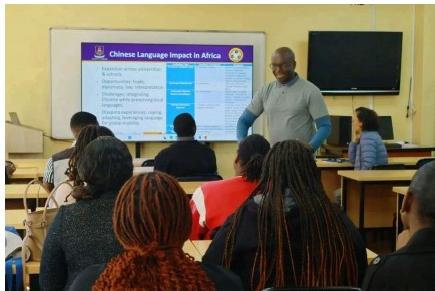
You are part of a system that you may not fully recognize,or perhaps are not eager to understand.The British Council has long been present,but today the Confucius Institute has surpassed it—and many others—in terms of scholarships awarded to Africans.What does this demonstrate?It shows a clear intention and purpose.
你们是一个体系的一部分,但你们可能并未完全认识到这一点,或者并不急于了解它。英国文化协会早已 存在,但我告诉你们,如今孔子学院在提供给非洲人的奖学金数量上已经超过了所有这些机构。这说明了 什么?说明意图明确、目的清晰。
If you recall one of my earlier slides,I asked:What do we want to achieve,and how do we want to achieve it?When the Confucius Institute was launched here in 2007,its mission was clear:to serve as a bridge between China and Zimbabwe.By 2024,Professor Li and I worked tirelessly to establish the Research Center for Exchange Between Civilizations,marking a shift from Zimbabwe-China relations to broader China- Africa engagement.
如果你们还记得我早先的一张幻灯片,我问过:我们想实现什么,以及如何实现?当孔子学院于2007年在 这里成立时,其使命很明确:成为津巴布韦与中国之间的桥梁。到2024年,李老师和我努力推动了文明交 流研究中心的成立,标志着从津中关系向更广泛的中非参与的转变。
This expansion is necessary.In November last year,we saw the emphasis placed on people-to-people exchange,with the Confucius Institute playing a central role in Africa.Yet the movement is not one- directional—it flows into Africa and then bounces back to China.Why?Because human capital development continues to take place,reinforcing the cycle of exchange.I will elaborate further on this in the next slide.
这种扩展是必要的。去年11月,我们看到了对人文交流的重视,孔子学院在非洲发挥着核心作用。然而这一运 动不是单向的——它流入非洲,然后又反弹回中国。为什么?因为人力资本发展在持续进行,强化了交流的循 环。我将在下一张幻灯片中进一步阐述。
Zimbabwe is actively promoting Chinese language education locally.At one point,we even had a degree program in Chinese studies,and we are now working hard with Professor Li to reintroduce another degree. This will benefit teachers greatly,since many of you are already engaged in teaching the language. Importantly,there are strong scholarship opportunities tied to such programs.
津巴布韦正在积极推广本地化的中文教育。我们曾经有一个中文研究学位课程,现在我们正努力与李老师 一起重新引入另一个学位。这将使教师们大大受益,因为你们中的许多人已经在从事语言教学了。重要的 是,这类项目有更多的奖学金机会。
To give you a sense of scale:among Zimbabwe's graduating population—close to 24,000 students—between 65%and 70%willhave studied Chinese.That means roughly 16,000 to 17,000 graduates each year are active learners of the language.
让你们了解一下规模:在津巴布韦的毕业人口中——接近24,000名学生——有65%到70%学过中文。这意 味着每年大约有16,000到17,000名毕业生是中文的积极学习者。
At the Confucius Institute,our mission is to promote partnerships.Recently,Prof Li led a delegation to Midlands State University,and we have also visited the National University of Science and Technology. These collaborations are about building university partnerships,which in turn are part of a broader movement —footsteps that begin in Zimbabwe but extend across Africa.
在孔子学院,我们的使命是促进伙伴关系。最近,李老师带领孔院团队去了中部省大学,我们此前还访问 了国家科技大学。这些合作是关于建立大学伙伴关系,而这些伙伴关系又是更广泛运动的一部分——始于 津巴布韦但延伸至整个非洲的脚步。
What you find out about student mobility is also another thing.We now have quite regular students going to China.I think some of the teachers joined a group of students,and they were in China last year to have an experience of how things are happening now.
关于学生流动,这也是另一个方面。我们现在有相当多的学生定期去中国。我想有些老师去年也加入了学生 团,去了中国,体验那里的情况。
3.Challenges and Opportunities
3. 挑战与机遇
Let us return to Africa.What has been the role of the Chinese language here,particularly through the Confucius Institute?My question remains:how many of us believe we would be doing something better if
there were no Confucius Institute and no teaching of Chinese?
让我们回到非洲。汉语在这里起到了什么作用,特别是通过孔子学院?我的问题仍然是:我们中有多少人 相信,如果没有孔子学院和中文教学,我们现在会过得更好吗?
Or let me put it differently:if there were no Chinese language programs,what would you be doing instead?It is difficult to imagine,because today you are living a good life,enjoying your work with your students,and benefiting from the training and opportunities provided by the Confucius Institute.Beyond the classroom,you are also experiencing Chinese culture—whether through language,scholarships,or even the cuisine that has become part of the exchange.
或者让我换个说法:如果没有中文项目,你们现在会做什么?很难想象,因为今天你们过着好日子,享受 工作,享受与学生相处的时光,并从孔子学院提供的培训和机会中受益。在课堂之外,你们也在体验中国 文化——无论是通过语言、奖学金,还是已经成为交流一部分的美食。
This is the value of the Confucius Institute:it has created a bridge that enriches both professional and personal lives,making cultural and educational exchange a lived reality rather than a distant idea.
这就是孔子学院的价值:它搭建了一座桥梁,丰富了职业和个人生活,让文化和教育交流成为活生生的现 实,而非遥远的概念。
There has been significant expansion,and the numbers speak for themselves—numbers don't lie.Today,we have 53 classrooms,plus universities that have integrated Chinese into their programs.Zimbabwe was among the first,perhaps even the very first in Africa,to incorporate Chinese into mainstream degree programs.For example,the BA in Chinese and Linguistics,Chinese and English,and honors in other languages.Some of you here are products of that system.
现在已经有了显著的扩展,数字说明了一切——数字不会说谎。今天,我们有53个中文教学点,包括已将 中文纳入课程的大学。津巴布韦是非洲首批,甚至可能是最早将中文纳入主流学位课程的国家之一。例 如,中文与语言学、中文与英语文学士学位,以及其他语言的荣誉学位。你们中的一些人就是该学位的毕 业生。
But what opportunities has this expansion brought to Africa through Chinese language education?Many. Some graduates are now working in legal fields they never formally trained for,serving as interpreters and even drafting legal memos.Others have moved into trade,diplomacy,and international relations.We have seen students complete their Chinese studies and then proceed to the Diplomatic School in Harare, where,after six months or a year of training,they have gone on to hold significant posts across the world.
但这种扩展为非洲带来了哪些机会?很多。 一些毕业生现在从事他们从未正式受训的法律领域,担任翻 译,甚至起草法律备忘录。其他人进入了贸易、外交和国际关系领域。我们看到学生完成中文学习后,进 入哈拉雷的外交学院,经过六个月或一年的培训,然后在世界各地担任重要职位。
This is not just about Zimbabwe—it is about becoming global citizens.When you step into these opportunities,it is no longer only about your country;it is about the world.That is the true impact of heritage-based education and the Confucius Institute's expansion in Africa.
这不仅仅是关于津巴布韦—而是关于成为全球公民。当你踏入这些机会时,不再仅仅关乎你的国家,而 是关乎世界。这就是基于遗产的教育和孔子学院在非洲扩展的真正影响。
As I mentioned before,learning Chinese is not just about China itself—it has practical value across Africa. For example,in South Africa,the Chinese presence is strong and will continue to be.Mastering the language allows you to engage more effectively in that environment.
正如我之前提到的,学习中文不仅仅是为了去中国——它在整个非洲都有实用价值。例如,在南非,中国 人的存在很强,而且会持续下去。掌握这门语言能让你更有效地融入那个环境。
Remember,Chinese is one of the official languages of the United Nations.That means opportunities are not limited to Chinese nationals.If there is a need for Chinese speakers,you too can apply,because you are conversant in the language.This opens doors far beyond Zimbabwe—it positions you as a global citizen with skills that are recognized and valued internationally.
请记住,中文是联合国官方语言之一。这意味着机会不仅限于中国公民。如果有需要中文人才的岗位,你 也可以申请,因为你精通这门语言。这打开了远超津巴布韦的大门 它将你定位为一名拥有国际认可和 重要技能的全球公民。
Now,let us consider some of the challenges facing Africa.One of the most pressing is how to integrate Chinese language education while still preserving our local languages.This is,in fact,the root of the problem.Many people seem more enthusiastic about learning Chinese than Shona,Ndebele,or other indigenous languages.
现在,让我们考虑一下非洲面临的一些挑战。最紧迫的问题之一是如何在推广中文教育的同时保护我们的 本地语言。这实际上正是问题的根源。许多人似乎对学习中文比对绍纳语、恩德贝莱语或其他土著语言更 热情。
Why is this the case?The answer lies in what I call the “after-service.”Learning Chinese often comes with tangible benefits—scholarships,opportunities to study aeronautics or engineering in China,and pathways to international careers.By contrast,with Shona or Ndebele,the after-service has not been clearly defined.What opportunities follow from mastering these languages?That is the question many ordinary people ask,even if linguists might frame it differently.
为什么会这样?答案在于我所说的"后续服务"。学习中文往往伴随着切实的好处——奖学金、去中国学习 航空或工程的机会,以及通往国际职业的道路。相比之下,对于绍纳语或恩德贝莱语,后续服务并没有被 明确定义。掌握这些语言之后有什么机会?这是许多普通人会问的问题,即使语言学家可能会用不同的方 式表述。
Think about it:many parents prefer to send their children to schools where English is taught,rather than where local languages are emphasized.Now,the same trend is emerging with Chinese.The challenge, therefore,is how to integrate Chinese language education while still preserving and professionalizing our local languages.Without this balance,we risk losing cultural identity in the pursuit of global opportunity.
想想看:许多父母更喜欢把孩子送到教英语的学校,而不是强调本地语言的学校。现在,同样的趋势正在 中文上出现。因此,挑战在于如何在推广中文教育的同时,保护和专业化我们的本地语言。没有这种平 衡,我们就有可能在追求全球机会的过程中丧失文化身份。
Let us talk about expansion and the challenges we face.Yes,there has been growth,but numbers don’t lie.We have more than 11000 functional schools,yet when someone asks,"Dr.Mukaro,Professor Li,how many teachers do you have?”the reality is sobering.The number of trained teachers is still far too smallcompared to the demand.That is why we hold these training sessions—to multiply exponentially,to widen the basket, so that one day we can say every province has at least one dedicated teacher
那么,让我们谈谈扩展和我们面临的挑战。是的,已经有了增长,但数字不会说谎。我们有超过11,000所 功能正常的学校,但当有人问:"穆卡罗博士,李老师,你们有多少中文老师?"现实是令人清醒的。与需 求相比,受过培训的中文教师数量仍然太少。这就是为什么我们举办这些培训——为了成倍增长,扩大篮 子,以便有一天我们可以说每个省至少有一名专职教师。
At present,however,the situation is uneven.Some provinces are active,while others—like Victoria—are not doing anything yet.The proof is clear:in many schools,there is only one teacher for Chinese language instruction.With over 11000 schools,that is a challenge we cannot ignore.
然而,目前情况不均衡。 一些省份很活跃,而另一些——比如维多利亚 - 还没有任何动作。证据很明 显:在许多学校,只有一名教师负责中文教学。面对超过11,000所学校,这是一个我们无法忽视的挑战。
This is why training,mentorship,and expansion are critical.If we can strengthen the teacher base,we can sustain the growth of Chinese language education in Zimbabwe and across Africa.
这就是为什么培训、导师制和扩展至关重要。如果我们能加强教师的基础,我们就能维持津巴布韦乃至整 个非洲中文教育的发展。
If you ask me,Chinese is not a threat to our local languages.Rather,it augments them.The reality,however, is that there are more opportunities tied to Chinese than to our indigenous languages,and that is something we must understand.
如果你问我,中文不是对我们本地语言的威胁,而是对它们的补充。然而,现实是,与我们的土著语言相 比,中文关联着更多机会,这是我们必须理解的。
This is why,as teachers,we need to work hard to integrate Chinese into the new heritage-based curriculum. We do not want Chinese to disappear—it is playing a role that perhaps even the government cannot fully play. It brings scholarships,cultural exchange,and global mobility.
这就是为什么,作为教师,我们需要努力思考如何将中文融入新的基于遗产的课程。我们不希望中文消失 ——它在发挥着也许连政府都无法完全发挥的作用。它带来奖学金、文化交流和全球流动性。
Yes,there is an element of copying,adopting,and leveraging.But that is not a weakness—it is a strategy.Just as movies,science,and technology spread across cultures,language too becomes a tool for global participation.By integrating Chinese while reinforcing our heritage-based curriculum,we ensure that
Zimbabwean identity remains strong,while at the same time equipping our students for international opportunities.
是的,其中有模仿、采纳和利用的成分。但这不是弱点——这是一种策略。正如电影、科学和技术跨文化 传播一样,语言也成为全球参与的工具。通过将中文融入我们的遗产课程,同时强化我们的遗产课程,我 们确保津巴布韦的身份保持强大,同时让我们的学生为国际机会做好准备。
I often share my story of arriving in China and the experience with Beijing duck.For those who spend extended periods there,you may find comfort in familiar foods like KFC or McDonald's.But culture in its entirety can give you shocks—moments that challenge you.Coping with these requires immersion.
我经常分享我到达中国和北京烤鸭的经历。对于那些将在中国待较长时间的人,你们可能会在肯德基或麦 当劳等熟悉的食物中找到安慰。但文化整体会给你带来冲击和挑战,应对这些需要浸入其中。
Think back to my first picture:we were dancing during Chinese festivities,joining in,participating in activities.That is a coping mechanism—when they go out,you go out;when they clap,you clap.Immersion helps you adapt and grow.
回想我的第一张照片:我们在中国的节日里跳舞,加入其中,参与活动。这是一种应对机制——他们出 去,你也出去;他们拍手,你也拍手。沉浸其中帮助你适应和成长。
But beyond coping,what is the role of Chinese culture in development?It is discipline,collectivism,hard work,and innovation.Innovation,in this context,is creativity that generates value—creativity that can be monetized.If it doesn’t bring value,it remains creativity,not innovation.
但除了应对之外,中国文化在发展中的作用是什么?是纪律、集体主义、勤奋和创新。创新,在这个语境 下,是能产生价值的创造力——可以被变现的创造力。如果它不能带来价值,它就只是创造力,不是创 新。
Discipline is about setting targets and seeing them through.Consider the stories of Chinese students preparing for the Gaokao,their university entrance exams.Many study relentlessly,some barely sleep,relying on supplements to sustain their energy.Why?Because discipline means setting a goal and pursuing it until it is achieved.
纪律是关于设定目标并坚持到底。想想中国学生备战高考的故事。许多人不知疲倦地学习,有些人几乎不 睡觉,依靠补品维持精力。为什么?因为纪律意味着设定一个目标并追求到底,直到实现。
These cultural traits—discipline,collectivism,hard work,and innovation—are not just abstract values;they are engines of development.They are lessons we can learn and integrate into our own systems.
这些文化特质——纪律、集体主义、勤奋和创新——不仅仅是抽象的价值观;它们是发展的引擎。是我们 可以学习并融入我们自己的体系的课程。
Collectivism means you cannot achieve success alone and then expect to reap the benefits of many—it is impossible.Collaboration is essential.I see many teachers here,but let me ask:how many of you have truly been collaborating?How many of you have reached out to one another—"Hey,how are you?How have you been teaching?”—and shared experiences?Only a few.Yet collaboration is the driver of mutual understanding and cooperation.
集体主义意味着你不能独自取得成功,然后期望享受众人的好处——这是不可能的。合作是必不可少的。 我看到在座有很多老师,但让我问:你们中有多少人真正合作过?你们中有多少人互相联系过 "嘿,你 好吗?你一直在怎么教?" 并分享经验?只有少数。然而合作是相互理解和合作的驱动力。
We now have a center here dedicated to mutual exchanges,and the footsteps between China and Africa are increasing.Within academia and education systems,teachers are traveling,and students are crossing borders. In January,we welcomed about 25 students from China who toured Zimbabwe.That is exchange at its best. And just recently,the ambassador hosted Chinese students paired with Zimbabwean students—another example of people-to-people cooperation.
我们现在在这里有一个致力于相互交流的中心,中国与非洲之间的交流正在增加。在学术界和教育系统 内,教师们在旅行,学生们在跨越国界。一月份,我们接待了大约25名来自中国的学生,他们在津巴布韦 游学。这就是最好的交流。就在最近,大使接待了与津巴布韦学生一对一交流的中国学生——这是人文合 作的又一个例子。
Technology also plays a role.Language learning applications are now part of this exchange.How many of you use them?I often use"Handy”for characters,and“"Lingo,"among others.These tools extend learning beyond the classroom,supporting development even after graduation.
技术也发挥着作用。语言学习应用现在已成为这种交流的一部分。你们中有多少人使用它们?我经常 用"Handy"学汉字,还有"Lingo" 等等。这些工具将学习延伸到课堂之外,即使在毕业后也能支持发展。
This is the essence of collectivism:collaboration,exchange,and technology working together to build bridges between cultures and strengthen education.
这就是集体主义的本质:合作、交流和技术共同作用,在文化之间搭建桥梁,加强教育。
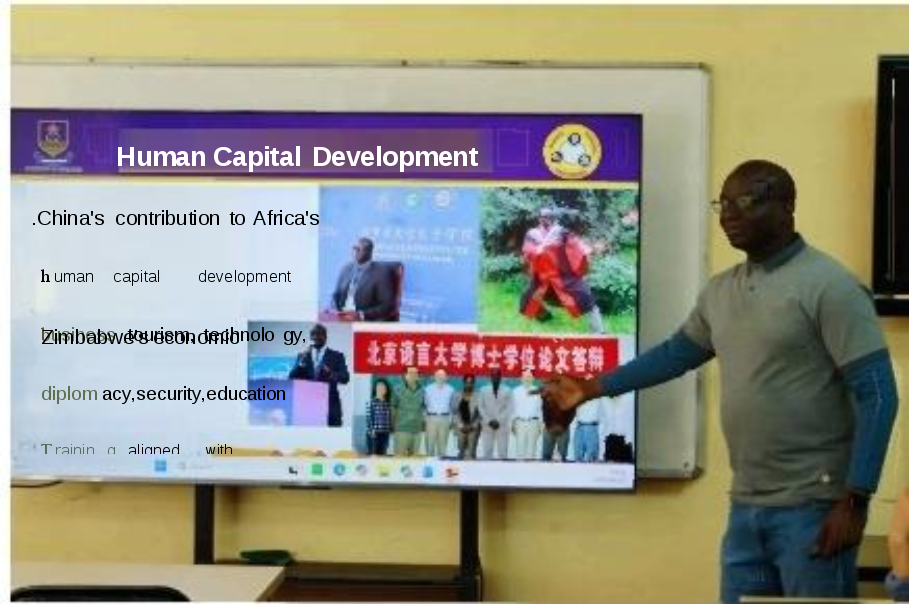
Respected teachers, let us look at this example: 北京语言文化大学—Beijing Language and Culture University.This is where PhD defenses take place,and it symbolizes the depth of China's contribution to Africa's human capital development.
尊敬的老师们,让我们看看北京语言文化大学的例子。这是博士答辩举行的地方,它象征着中国对非洲人 力资本发展的贡献之深。
The scale of this contribution is immense.Through scholarships alone,Zimbabwe has benefited enormously. We are now approaching close to a million scholarships granted in various forms—some lasting six weeks, some two weeks,others extending to full degree programs.These opportunities have been offered to individuals across ministries,departments,and institutions.
这种贡献的规模是巨大的。仅通过奖学金,津巴布韦就受益匪浅。我们现在有接近一百万项各种形式的奖 学 金——有些持续六周,有些两周,有些延伸到完整的学位项目。这些机会提供给了各个部委、部门和机构的个人。
This is China's hand in human capital development:opening doors for Zimbabweans and Africans to gain skills,knowledge,and exposure that would otherwise be inaccessible.It is not just about numbers—it is about transformation,equipping our people to participate in global education,trade,diplomacy,and innovation.
这就是中国在人力资本发展中的作用:为津巴布韦人和非洲人打开大门,让他们获得否则无法获得的技 能、知识和视野。这不仅仅是关于数字 而是关干转型,让我们的公民能够参与全球教育、贸易、外交 和创新。
One important sign that China is serious about human capital development is the way it manages student visas.When you graduate,your visa ends,and you are expected to return home.Why?Because China does not simply want graduates to remain there—it wants them to go back,contribute to their own countries,and then,if qualified,apply again to return.That is good friendship,what we often call an “all-weather” relationship.
中国认真对待人力资本发展的一个重要标志是它管理学生签证的方式。当你毕业时,你的签证就结束了, 你应该回国。为什么?因为中国不只是希望毕业生留在那里——它希望他们回去,为自己的国家做贡献, 然后,如果符合条件,再次申请回来。这就是良好的友谊,我们常说的"全天候"关系。
For Zimbabwe,this aligns closely with our own economic priorities.What are those priorities?We want to modernize Zimbabwe.We want to industrialize Zimbabwe.We want strong social protection systems so that our people are safeguarded.That is why the government prioritizes scholarships in engineering,medicine, pharmacy,and other critical fields.
对于津巴布韦来说,这与我们自己的经济优先事项密切相关。这些优先事项是什么?我们想要现代化津巴 布韦,我们想要工业化津巴布韦我们想要强大的社会保护体系,让我们的人民得到保障。这就是为什么政 府优先提供工程、医学、药学和其他关键领域的奖学金。
We need more engineers to build our bridges,more doctors to care for our people,more pharmacists to strengthen our health systems.These scholarships are not random—they are targeted to meet Zimbabwe's development needs.And in this way,China's approach to human capital development complements Zimbabwe's vision for modernization and industrialization.
我们需要更多工程师来建造桥梁,更多医生来照顾我们的人民,更多药剂师来加强我们的卫生系统。这些 奖学金不是随机的——它们是针对性的,以满足津巴布韦的发展需求。通过这种方式,中国的人力资本发 展方法补充了津巴布韦对现代化和工业化的愿景。
Building intercultural competencies for global competitiveness—that is exactly what we are doing here at the Confucius Institute,and today is evidence of that.But let us pause and ask:what does heritage-based education mean in the context of Chinese teaching?
培养全球竞争力的跨文化能力——这正是我们在孔子学院所做的,今天就是明证。但让我们停下来问一 问:在中文教学的语境下,基于遗产的教育意味着什么?
Heritage-based education means crafting a curriculum that draws from what we already have,and using it to emancipate our people from their surroundings.If Zimbabwe is endowed with minerals,then our education system should speak directly to how those minerals can be exploited for our benefit.That is why universities have responded with degrees in oil rigging,mining,and even drug discovery.
基于遗产的教育意味着制定一套汲取我们已有资源的课程,并用它来将人民从他们的环境中解放出来。如 果津巴布韦拥有矿产,那么我们的教育体系就应该直接谈论如何开采这些矿产以造福我们。这就是为什么 大学已经做出了回应,开设了石油钻井、采矿甚至药物发现等学位。
Drug discovery,for example,connects directly to our heritage.Many of us who grew up in rural areas remember the traditional healers who treated snake bites with local remedies.They would cut near the wound, apply medicine,and send the patient home with confidence.That knowledge is part of our heritage,yet it has not been systematically integrated into our universities.It should be.
例如,药物发现直接与我们的遗产相连。我们中许多在农村长大的人都记得,传统治疗师用本地疗法治疗 蛇咬伤。他们会在伤口附近切开,敷上药,然后自信地让患者回家。这些知识是我们遗产的一部分,然而 它尚未被系统地融入我们的大学。它应该被融入。
I even saw people laughing at a university that introduced a degree in witchcraft.But I said,"That is good— that is our heritage.”Witchcraft,traditional healing,indigenous knowledge systems—these are part of who we are.The question is not whether they belong in academia,but how we study them,preserve them,and integrate them into modern education.
我甚至看到人们在嘲笑一所开设了巫术学位的大学。但我说:"那很好——那是我们的遗产。"巫术、传统 治疗、土著知识体系 — — 这些是我们身份的一部分。问题不在干它们是否属干学术界,而在干我们如何研 究它们、保护它们,并将它们融入现代教育。
This is the essence of heritage-based education:taking what is ours,valuing it,and aligning it with global opportunities.Chinese language teaching fits into this framework not as a replacement,but as an augmentation—helping us connect our heritage to the wider world.
这就是基于遗产的教育的本质:拿起属于我们的东西,珍视它,并将其与全球机会对齐。中文教学在这个 框架中不是作为替代品,而是作为增强——帮助我们将遗产与更广阔的世界连接起来。
Chinese learning as a tool for innovation,collaboration,and global citizenship—that is exactly what we are building here at the Confucius Institute.This is our agentic role:creating a sense of place where language, culture,and technology intersect.Through the exchanges I have mentioned—mutual exchanges between Zimbabwe and China—we are advancing ourselves.
中文学习作为创新、合作和全球公民意识的工具——这正是我们在孔子学院所构建的。这是我们的能动性 角色:创造一个语言、文化和技术交汇的地域感。通过我提到的交流——津巴布韦与中国之间的相互交流 ——我们正在提升自己。
Imagine one day a school in Zimbabwe saying:“Our students collaborated and developed an application to learn Chinese.”That would be heritage-based education in action—culture as the foundation,technology asthe tool,and collaboration as the method.
想象一下,有一天津巴布韦的一所学校说:"我们的学生合作开发了一个学习中文的应用程序。哪将是基 于遗产的教育在行动——文化作为基础,技术作为工具,合作作为方法。
The Confucius Institute is rooted in values that connect language to politics,economy,and history.The challenge for us as teachers is how to balance heritage-based education with the teaching of Chinese.Many Chinese textbooks talk about subways or airplanes—things that exist but are not part of everyday life in Harare.What we need is to adapt methodologies to our own context:buses,local realities,Zimbabwean culture.
孔子学院植根于将语言与政治、经济和历史联系起来的价值观。作为教师,我们的挑战是如何平衡基于遗 产的教育与中文教学。许多中文教材谈论地铁或飞机——这些东西存在,但不是哈拉雷日常生活的一部 分。我们需要做的是调整方法以适应我们自己的语境:公共汽车、本地现实、津巴布韦文化。
Professor and I,together with colleagues,have worked to enhance these methodologies.But we cannot do it alone.You,as teachers,must also become cultural ambassadors—integrating Chinese language learning with Zimbabwean heritage,and showing students how language can be leveraged for global mobility while remaining rooted in local identity.
李老师和我以及同事们一起努力改进这些方法。但我们不能独自完成。你们,作为教师,也必须成为文化 大使——将中文学习与津巴布韦遗产融合,向学生展示语言如何既能被利用于全球流动,又能扎根于本地 身份。
Now that we understand heritage-based education,and now that we recognize the footsteps between China and Africa,the question becomes:how do we balance this knowledge to convince those who say,"We don't want Chinese"?
现在你们理解了基于遗产的教育,现在你们认识到中国与非洲之间的脚步,问题就变成了:我们如何平衡 这些知识,去说服那些说"我们不想要中文"的人?
This is where your role as teachers becomes critical.You are not only teaching students—but you are also guiding parents and school authorities.When a headmaster is under pressure,you must be ready to step in and explain:Chinese language learning is not a threat;it is an opportunity.It is a gateway to scholarships, careers,and global citizenship.
这就是你们作为教师的关键角色。你们不仅是在教学生——你们也在引导家长和学校当局。当校长面临压 力时,你们必须准备好介入并解释:中文学习不是威胁,而是机会。它是通往奖学金、职业和全球公民身 份的门户。
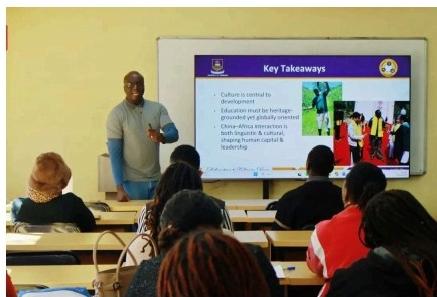
When teaching,identify talent.Some students will be especially active and curious—they may want to read about Chinese architecture,culture,or history.Support them.Help them realize their dreams.Education must be heritage-grounded and yet globally oriented.That is the balance we seek.
教学时,要识别天赋。有些学生会特别活跃和好奇——他们可能想阅读关于中国建筑、文化或历史的内 容。支持他们。帮助他们实现梦想。教育必须植根于遗产,同时面向全球。这就是我们寻求的平衡。
Localization is key.Many Chinese textbooks talk about subways or trains,but in Harare we ride buses.Why not adapt the materials to reflect our own realities?Why not write books that speak to Zimbabwean life while teaching Chinese?That is heritage-based education in practice—linking local culture with global language.
本土化是关键。许多中文教材谈论地铁或火车,但在哈拉雷我们乘坐公共汽车。为什么不调整材料以反映 我们自己的现实?为什么不写一些在教中文的同时讲述津巴布韦生活的书?这就是实践中的基于遗产的教 育——将本地文化与全球语言联系起来。
We have already seen teachers bring manuscripts and ideas.Some disappeared before they were developed, but the vision remains:to create resources that reflect China-Africa interaction,both linguistically and culturally.This shapes human capital and leadership.
我们已经看到老师们带来手稿和想法。有些在开发之前就消失了,但愿景依然存在:创建反映中非互动的 资源,无论是语言上还是文化上。这塑造了人力资本和领导力。
I began practicing this approach as early as 2010,and with guidance from the professors,I learned how to refine it.Today,I understand it fully:heritage-based education must be localized,yet globally connected.And teachers must become cultural ambassadors,bridging Zimbabwean identity with Chinese opportunities.
早在2010年,我就开始实践这种方法,在老师们的指导下,我学会了如何完善它。今天,我完全理解了: 基于遗产的教育必须本土化,同时又要全球连接。而教师必须成为文化大使,在津巴布韦身份与中国机会 之间搭建桥梁。
Q&A Session问答环节
Teacher 1:What are the differences between the Confucius Institute and other institutions(such as the British Council)?
孔子学院与其他机构(如英国文化协会)有何不同?
Mukaro:
When we talk about China and Africa,we are really talking about life itself—food,culture,and civilizations in dialogue.These exchanges are not abstract;they are lived experiences.As people exchange ideas, knowledge,and human capital,we see tangible outcomes.
当我们谈论中非之间时,我们真正关注的是生活本身——食物、文化,以及文明之间的对话。这些交流不 是抽象的;它们是活生生的体验。当人们交流思想、知识和人力资本时,我们看到了切实的成果。
Human capital is one of the greatest contributions China has made to Africa.I am myself a product of that investment—I studied in China,and the skills I gained are part of the human capital developed by China for Zimbabwe.This is not theory;it is lived reality.
人力资本是中国对非洲最伟大的贡献之一。我自己就是这项投资的产物——我在中国学习,我获得的技能 是中国为津巴布韦培养的人力资本的一部分。这不是理论;这是活生生的现实。
I recall being in Shandong,a province in China.Do you know Shandong?It is famous for its food—slightly salty—and for its beer,which,as the locals say,doesn't get you drunk.These small cultural details matter because they remind us that exchange is not only about scholarships or degrees;it is also about experiencing life in another civilization,and then bringing that knowledge back home.
我记得我在山东,中国的一个省份。你们知道山东吗?它以食物闻名  稍微有点咸——还有它的啤酒, 正如当地人所说,不会让你醉。这些小的文化细节很重要,因为它们提醒我们,交流不仅仅是关于奖学金 或学位;它也是关于在另一种文明中体验生活,然后将这些知识带回家。
This is the essence of China-Africa cooperation:human capital development,cultural immersion,and the sharing of everyday life,from classrooms to cuisine.
这就是中非合作的本质:人力资本发展、文化沉浸,以及从课堂到美食的日常生活分享。
The Confucius Institute offers opportunities that go far beyond language learning.Scholars who study China's growth often point out that China provides developing nations with practical development models and pathways.Through this institute,we gain access to those opportunities,which gives us a significant advantage—especially considering that Chinese is not only one of the global languages but also one of the official languages of the United Nations.
孔子学院提供的机会远远超出了语言学习。研究中国发展的学者经常指出,中国为发展中国家提供了切实 的发展模式和路径。通过这个学院,我们获得了这些机会,这给了我们显著的优势——尤其考虑到中文不 仅是全球语言之一,也是联合国官方语言之一。
To compare,institutions like the British Council often focus on language testing,with many learners studying English simply to pass exams.But with Chinese,the motivation is different.We are not learning Chinese merely to enter another country;we are learning it as a skill,as part of human capital development.
相比之下,像英国文化协会这样的机构往往专注于语言测试,许多学习者学习英语只是为了通过考试。但 学习中文的动机不同。我们学习中文不仅仅是为了进入另一个国家;我们学习它是作为一项技能,作为人 力资本发展的一部分。
Chinese language learning equips us with tools for innovation,collaboration,and global citizenship.It is about upskilling—preparing our people to engage in trade,diplomacy,technology,and cultural exchange. This is why the Confucius Institute is so important:it positions Zimbabwe and Africa to benefit from China's development models while strengthening our own human capital base.
中文学习为我们提供了创新、合作和全球公民意识的工具。它是关于技能提升——让我们的人民为参与贸 易、外交、技术和文化交流做好准备。这就是为什么孔子学院如此重要:它让津巴布韦和非洲能够从中国 的模式中受益,同时加强我们自己的人力资本基础。
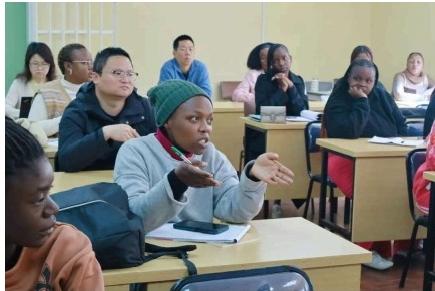
Teacher 2:That's a very thoughtful suggestion,and it touches on something quite practical.You're right— Chinese has what you called “after-service,”meaning it comes with clear pathways:scholarships,jobs, exchanges,and professional opportunities.That's why it feels different from many other languages.
这是一个非常深思熟虑的建议,而且触及了一些非常实际的问题。你说得对——中文有你所说的"后续服 务",意味着它有清晰的路径:奖学金、工作、交流和专业机会。这就是为什么它感觉与许多其他语言不 同。
Your idea of introducing a diploma in teaching Chinese and English is powerful.Not everyone can afford or commit to a full degree program,but a diploma would make the skill more accessible,especially for teachers' colleges.It would create a middle ground—shorter,less expensive,but still professional—so that more educators can be trained and certified.This would expand the pool of teachers and strengthen the sustainability of Chinese language education in Zimbabwe.
你关于开设中文与英语教学文凭课程的想法很有力量。不是每个人都能负担得起或承诺完成完整的学位课 程,但文凭会让这项技能更容易获得,特别是对师范学院而言。它会创造一个中间地带——更短、更便 宜,但仍然专业 - 文样更多的教育工作者就能接受培训和认证。这将扩大教师群体,加强津巴布韦中文 教育的可持续性。
It also aligns perfectly with the heritage-based education model we've been discussing:local institutions adapting global opportunities to local needs.A diploma program could be designed to balance Chinese language pedagogy with Zimbabwean cultural context,ensuring that teachers are not only language instructors but also cultural ambassadors.
这也与我们一直在讨论的基于遗产的教育模式完美契合:本地机构将全球机会适应本地需求。文凭课程可 以设计为平衡中文语言教学法与津巴布韦文化语境,确保教师不仅是语言教师,也是文化大使。
Mukaro:
That's an excellent way of looking at it—making the pathway wholesome and layered.Once the dual honors degree is established,it naturally creates space for supporting diplomas,like the one you suggested earlier. That way,students who may not have the resources or time for a full degree can still gain professional certification,while those who want to advance further can continue into the honors track.
这是看待问题的一种绝佳方式——让路径更加全面和分层。一旦双荣誉学位课程体系建立起来,它自然就 能为像您之前建议的辅助文凭创造空间。这样,那些可能没有资源或时间完成完整学位的学生仍然可以获 得专业认证,而那些希望继续深造的人则可以进入学位课程系统学习。
This tiered approach—diploma,degree,dual honors—builds a pipeline of human capital.It ensures inclusivity,accessibility,and progression.It also strengthens the sustainability of Chinese language education in Zimbabwe by widening the base of trained teachers and learners.
这种分层方法——文凭、学位、双系统——构建了人力资本管道。它确保了包容性、可及性和进阶性。通 过扩大受过培训的教师和学习者的基础,它也加强了津巴布韦中文教育的可持续性。
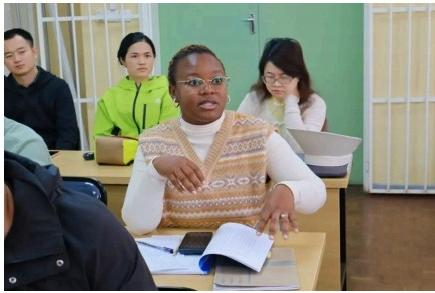
Teacher 3:
It's the change coming into;we have benefited more than just learning language.We have infrastructure development,which is crucial or maybe which is part of China's local..that.The Chinese will always say "a shared future,a better shared future,"isn't it?
变化正在到来,我们不仅仅从语言学习中受益。我们还有基础设施建设,这也很重要,也许是中国本土的 一部分……中国人总是说"共享未来,更美好的共享未来",不是吗?
Mukaro:
That's a wonderful way to round off—linking the idea of a better,fair,shared future with the tangible changes we can already see.The Confucius Institute is not just about language;it's about building comfort, confidence,and shared growth.
这是一个很好的总结方式——将更美好、公平、共享的未来理念与我们已经可以看到的切实变化联系起 来。孔子学院不仅仅是关于语言;它是关于建立舒适、信心和共享增长。
And you're right—China's involvement is visible in many areas.Look at our airport:it has become exquisite, a symbol of modernization and partnership.It's the kind of place you'd want to visit every weekend,simply because it reflects progress and pride.These are the signs of satisfaction—evidence that collaboration is not abstract,but lived in infrastructure,education,and everyday experiences.
你说得对——中国的参与在许多领域都是可见的。看看我们的机场:它变得精美绝伦,是现代化和伙伴关 系的象征。它是那种你每个周末都想去的地方,仅仅因为它反映了进步和自豪。这些是满意的标志——证 明合作不是抽象的,而是体现在基础设施、教育和日常体验中。
This is the essence of what you've been saying:sharing,building,and making sure everyone is comfortable. It's about mutual benefit,where language,culture,and development converge to create a future that feels both global and local.
这就是你所说的本质:分享、建设,确保每个人都舒适。这是关于互惠互利,语言、文化和发展在此交 汇,创造一个既全球化又本地化的未来。
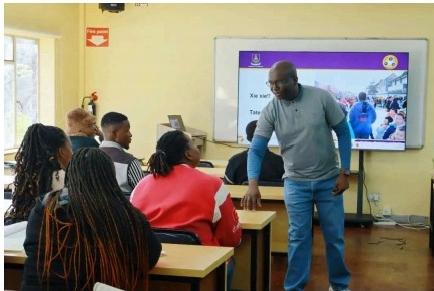
Summary(Professor Li): 总结
Beautifully said.Let us indeed thank Dr.Mukaro for such an insightful presentation.These reflections on language,c ulture,and development remind us that education rooted in heritage yet open to global collaboration is the true foundation of future leadership and meaningful international partnerships.
说得太好了。让我们再次感谢穆卡罗博士带来的这次富有洞见的演讲。这些关于语言、文化和发展的反思 提醒我们,植根于遗产又对全球合作开放的教育,是未来领导力和有意义的国际伙伴关系的真正基础。
It is inspiring to think that among the teachers and students gathered here,some will become the leaders who carry forward this vision—leaders who will strengthen Zimbabwe's human resources while deepening ties with China and the wider world.That is the essence of building a shared future:one that is fair,wholesome, and comfortable for all.
想到在座的一些老师和学生中,有些人将成为推进这一愿景的领导者——既加强津巴布韦的人力资源,又 深化与中国及更广泛世界的联系,这令人鼓舞。这就是建设共享未来的本质: 一个对所有人来说都公平、 全面、舒适的未来。
Thank you once again,Dr.Mukaro,for guiding us through this journey of heritage,language,and global citizenship.This is not just a reflection—it is a call to action for all of us.
再次感谢穆卡罗博士,感谢您带领我们走过这段关于遗产、语言和全球公民身份的旅程。这不仅仅是一种 反思- 它是对我们所有人的行动号召。
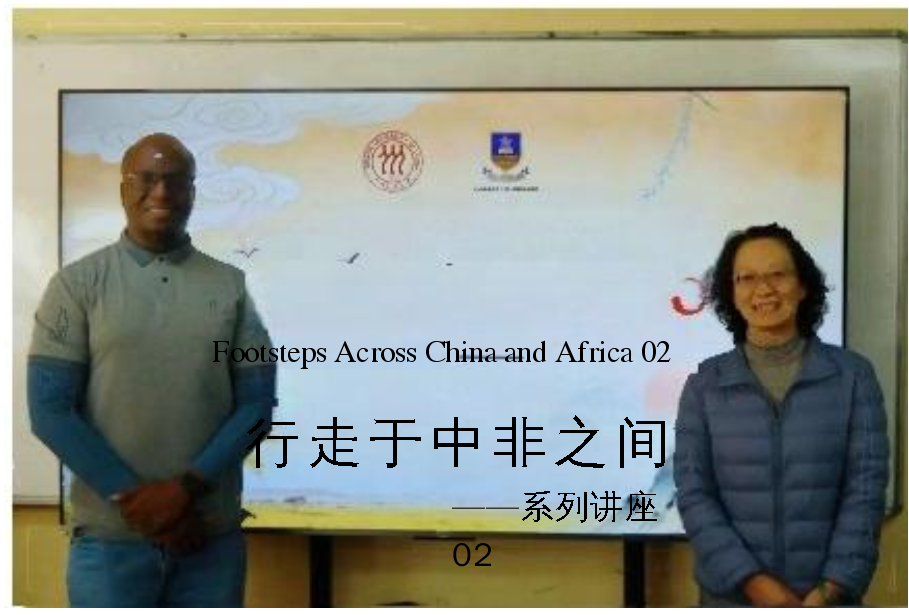
图片及录音整理周兴祥 编译李丽琴