
都柏林大学孔子学院举办中国武术文化工作坊
2026-02-15
点击量: 次浏览
Happy Chinese New Year


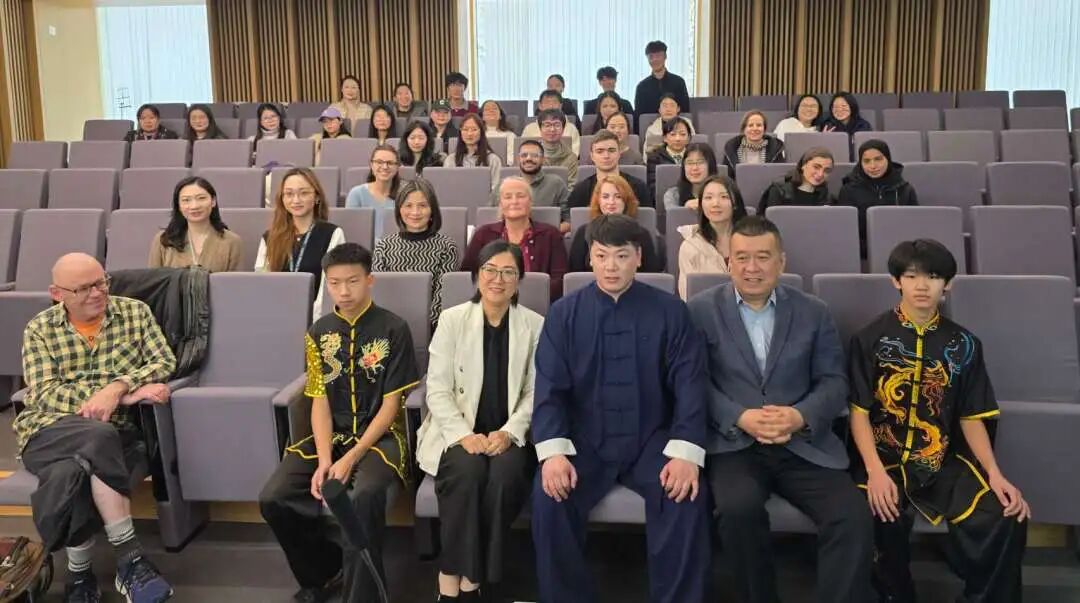
随着春节临近,2026年2月11日,都柏林大学孔子学院在大楼中庭举办了“中国武术文化工作坊”,邀请师生共庆新春佳节。这一活动也是孔院20周年庆典系列之一,通过表演、讲解和互动,向观众展示中国传统武术的历史、理念与文化精神,同时为UCD社区带来丰富的多元文化体验。本次活动特别邀请到衡水八极拳协会会长李晓阳及其弟子康嘉硕和孙向阳进行现场展示与工作坊教学。
As the Spring Festival approached, the UCD Confucius Institute hosted a “Chinese Martial Arts Culture Workshop” in the building atrium on 11 February 2026, inviting faculty and students to celebrate the Chinese New Year together. As part of the Institute’s 20th anniversary celebration series, the event combined performances, explanations, and interactive sessions to vividly showcase the history, philosophy, and cultural spirit of traditional Chinese martial arts, while bringing a rich and diverse cultural experience to the UCD community. The workshop specially invited Li Xiaoyang, President of the Hengshui Bajiquan Association, together with his disciples Kang Jiashuo and Sun Xiangyang, to deliver live demonstrations and lead the workshop sessions.
活动伊始,三位武术表演者在孔院大楼中庭为观众带来了精彩的武术展示,以刚劲有力、动静结合的动作展现了中国传统武术的独特魅力,赢得了现场观众的热烈掌声。随后,会长李晓阳进行了自我介绍并介绍了中国武术的发展历史与基本知识。
The workshop opened with a captivating martial arts performance in the atrium of the Confucius Institute building. Demonstrating strength, precision, and a seamless blend of stillness and motion, the three performers brought the unique charm of traditional Chinese martial arts vividly to life, earning enthusiastic applause from the audience. Following the performance, President Li Xiaoyang gave a brief self-introduction and shared an engaging overview of the history and fundamentals of Chinese martial arts.



李武师从中国古代原始打猎与生存技能谈起,回顾了武术在明清时期镖局护卫、冷兵器时代实战应用中的重要作用,并介绍了中国武术中长兵器与短兵器的分类与特点。同时,他们也指出,现代武术在传承实战技艺的同时,更注重舞台展示与文化传播的表现形式。
The instructors traced the origins of martial arts from early hunting and survival practices in ancient China, through its role in the Ming and Qing dynasties, including escort and protection services during the cold-weapon era. They explained the distinctions between long and short weapons and discussed how modern martial arts has evolved to incorporate stage performance and cultural presentation while preserving traditional techniques.
在文化礼仪环节,李武师重点讲解了中国武术最具代表性的礼仪——抱拳礼。从起势、柳叶掌到平拳的动作结构,讲师阐释了其深层文化寓意:掌置于拳上,象征以礼制武、以德约力,体现内外合一、心怀敬畏的中华传统价值观。讲师强调,中国武术不仅源于实战,更强调“习武先习德”,武德的核心在于克制、守护与不轻易出手。抱拳礼被视为最能代表中国武术精神的礼节象征。
In the section on martial arts etiquette, the instructors explained the Baoquan Li (the traditional fist-and-palm salute), one of the most iconic gestures in Chinese martial arts. They demonstrated the sequence from the opening stance to the “willow-leaf palm” and the flat fist, explaining its symbolism: the palm placed over the fist represents courtesy restraining force, reflecting the values of unity between inner virtue and outer skill, as well as respect and humility. The instructors highlighted that Chinese martial arts emphasizes moral cultivation—wu de (martial virtue)—prioritizing restraint, protection of others, and avoiding unnecessary conflict. The salute is regarded as a key symbol of Chinese martial arts culture.
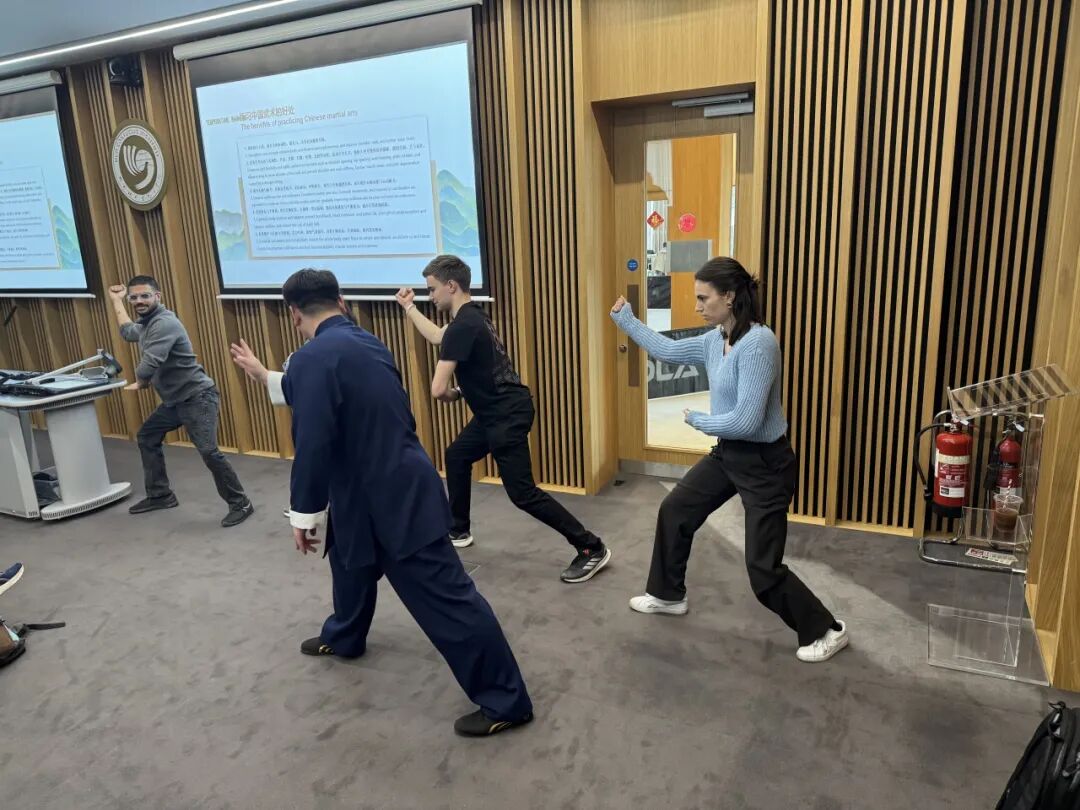
随后,李武师现场演示并讲解了弓步、马步、虚步等基本步法。这些动作被视为中国武术的基础训练内容,强调下盘稳定、重心控制与身体协调。
The instructors then demonstrated fundamental stances, including the bow stance, horse stance, and empty stance. These postures are core training foundations in Chinese martial arts, emphasizing lower-body stability, balance, and coordination.
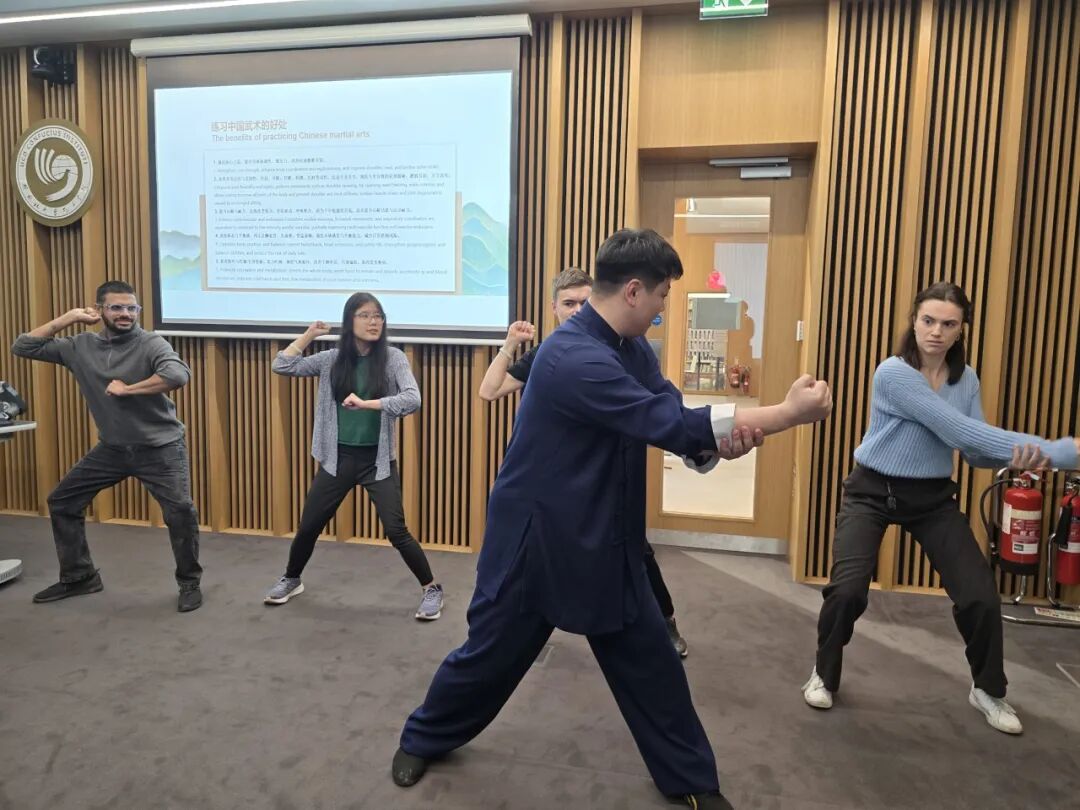
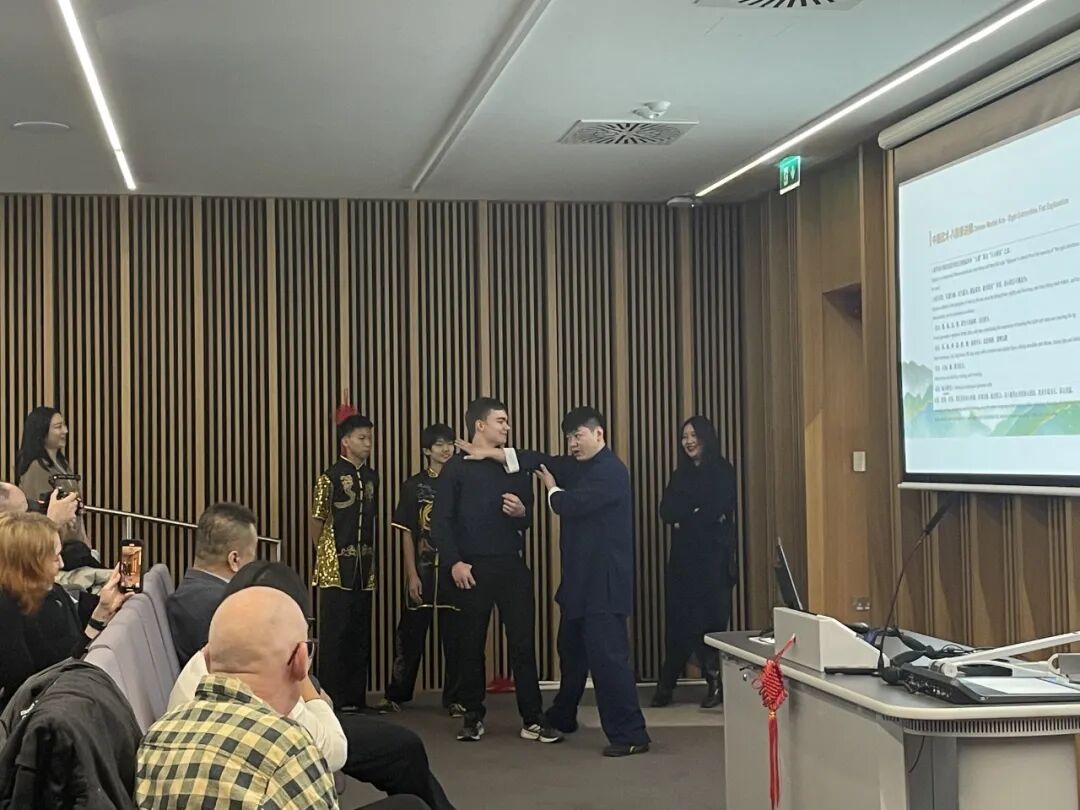
在介绍八极拳时,李武师讲解了其“近身短打”的技击理念,涵盖擒拿、格斗等实战技法,并介绍了八极拳中特有的“逆腹式呼吸”方法,用以增强爆发力与内劲运用。随后,一位观众被邀请上台体验八极拳的出招与格挡动作,展示了其强调瞬间爆发与贴身发力的技术特点。
In the introduction to Bajiquan, the instructors explained its close-range combat philosophy, including grappling and striking techniques, and introduced the concept of reverse abdominal breathing used to enhance explosive power and internal strength. A volunteer from the audience was invited to experience Bajiquan techniques firsthand, illustrating the style’s emphasis on rapid, powerful movements and close-contact application.
活动最后,四位观众被邀请上台参与互动教学,在李会长的指导下体验了抱拳礼、马步以及扭身出拳等基本动作。参与者在实践中感受了中国武术对身体协调、力量控制与精神专注的要求,现场气氛热烈而友好。
At the conclusion of the workshop, four audience members joined the instructors on stage for hands-on practice, learning the fist-and-palm salute, horse stance, and twisting punch techniques. Participants experienced firsthand the coordination, control, and mental focus required in Chinese martial arts, creating an engaging and lively atmosphere.
本次中国武术文化工作坊不仅展示了中国传统武术的技艺魅力,更通过历史、礼仪与哲学内涵的讲解,加深了参与者对中华文化的理解。都柏林大学孔子学院未来将继续通过多元文化活动促进跨文化交流,推动中爱文化互鉴与合作。
The Chinese Martial Arts Workshop not only highlighted the technical artistry of traditional martial arts but also deepened participants’ understanding of Chinese history, etiquette, and philosophy. The UCD Confucius Institute stated that it will continue to promote intercultural dialogue and cooperation through diverse cultural initiatives.

新年快乐 更多精彩 欢迎关注我们